Skip to Content

All Courses

Mechanical Design & Manufacturing using SolidWorks

Description

Students develop the skills required to design real mechanical parts, mechanisms, and complete machines using SolidWorks.

They learn how to analyze a mechanical part, create accurate and fully defined sketches, select the appropriate modeling features, and build professional parametric 3D models with strong Design Intent.

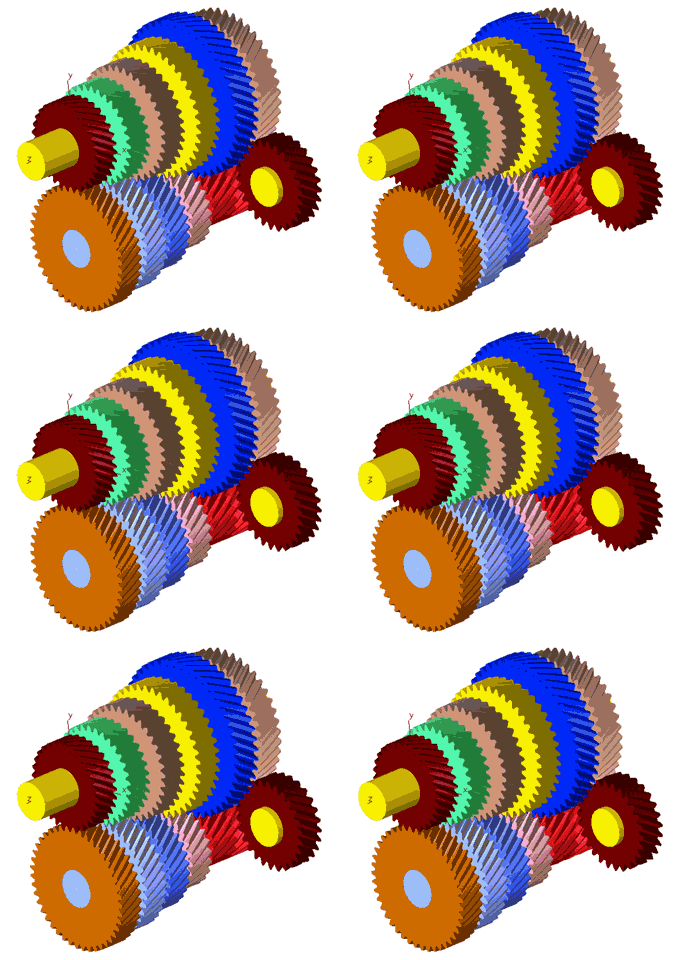
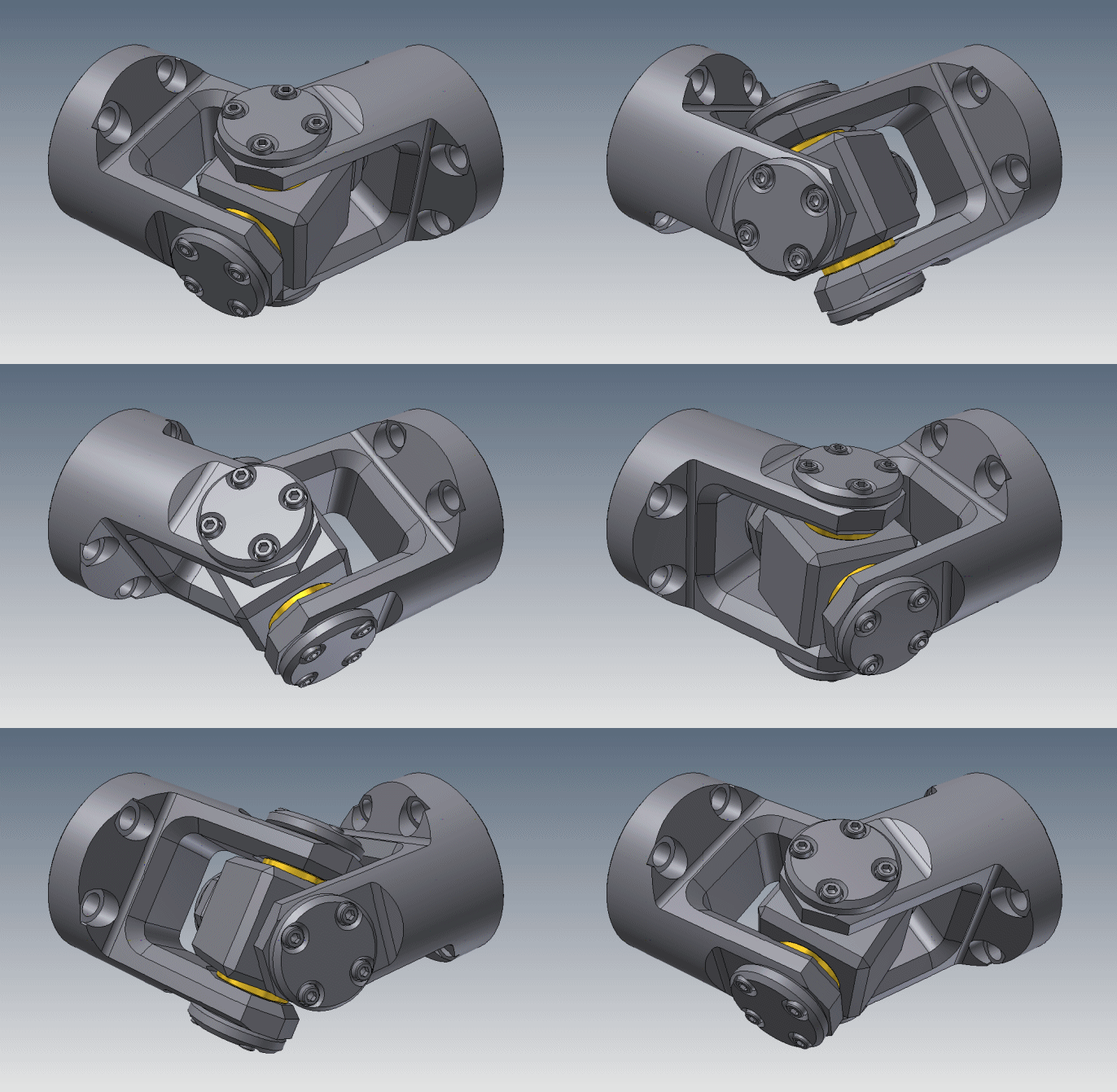
Alongside CAD skills, students explore essential machine components including Shafts, Bearings, Fasteners, Couplings, Pulleys, Belts, and Gears, understanding how these components work together to transmit motion and power inside real machines.

Students progress from individual parts to mechanisms, subassemblies, and complete machine assemblies while learning Engineering Drawing, Tolerances, Materials, Design for Manufacturing, Motion, Fits, and Assembly Design.

By the end of the course, students move beyond simply using SolidWorks tools to thinking as mechanical designers: analyzing requirements, selecting components, designing manufacturable parts, and integrating them into a complete functional machine.

Learning Objectives

By the end of the course, students will be able to:

  • Understand the basic Mechanical Engineering Design Process.
  • Read and interpret basic Engineering Drawings.
  • Understand dimensions, measurement, tolerances, clearances, and fits.
  • Analyze the geometry of a mechanical part before modeling it.
  • Select the appropriate starting plane and modeling strategy for a part.
  • Create accurate and Fully Defined Sketches.
  • Apply geometric relations and dimensions correctly.
  • Understand Parametric Modeling and Design Intent.
  • Select the appropriate SolidWorks feature based on part geometry.
  • Use Extrude, Cut, Revolve, Sweep, Loft, Shell, Rib, Pattern, Mirror, Fillet, Chamfer, and Hole features.
  • Plan and organize a logical Feature Tree for mechanical parts.
  • Design increasingly complex mechanical parts from engineering requirements.
  • Measure and reverse-engineer simple physical components.
  • Understand common engineering materials and their applications.
  • Understand the fundamentals of 3D Printing, CNC Machining, and Laser Cutting.
  • Design parts while considering real manufacturing limitations.
  • Understand and design with Fasteners, Shafts, Bearings, Bushings, and Couplings.
  • Understand Gears, Pulleys, Belts, and mechanical power transmission.
  • Understand basic relationships between Speed, Torque, and Transmission Ratio.
  • Design simple mechanisms for transmitting and converting motion.
  • Select suitable mechanical components for a machine.
  • Design motor mounts, bearing supports, shafts, frames, and other functional machine parts.
  • Create mechanical Subassemblies and Complete Assemblies.
  • Apply SolidWorks Mates and understand Degrees of Freedom.
  • Analyze mechanical motion inside an assembly.
  • Detect interference, clearance, and assembly problems.
  • Modify parts based on assembly and manufacturing requirements.
  • Create Engineering Drawings, Exploded Views, and Bills of Materials.
  • Break a complete machine into Systems, Subsystems, Components, and Parts.
  • Transform engineering requirements into a complete mechanical design.
  • Integrate individually designed parts and standard components into a functional machine assembly.
  • Complete the engineering workflow from Requirements → Concept → Part Design → Component Selection → Assembly → Verification → Manufacturing Documentation.
ExpoTec TopX
Python Fundamentals
Python Fundamentals

Description

Students begin Level 3 by mastering Python, one of the most widely used programming languages in engineering, automation, data processing, Computer Vision, and Artificial Intelligence.

The course progresses from Python fundamentals into more advanced programming concepts, giving students the ability to design larger and better-organized software systems.

Students learn how to solve problems algorithmically, organize programs into functions and modules, work with different data structures, handle files and data, manage errors, and develop increasingly complex applications.

Rather than learning Python syntax alone, students learn how to use programming as an engineering problem-solving tool.

This foundation prepares them for Raspberry Pi development, Linux-based engineering systems, Computer Vision, and AI applications in the following courses.

Learning Objectives

By the end of the course, students will be able to:

  • Understand Python syntax and program structure.
  • Work confidently with Variables and Data Types.
  • Use arithmetic, logical, and comparison operators.
  • Develop decision-making logic using Conditions.
  • Use For and While Loops effectively.
  • Understand and use Functions.
  • Work with Lists, Tuples, Sets, and Dictionaries.
  • Process Strings and structured data.
  • Understand program scope.
  • Organize larger programs into Functions and Modules.
  • Work with Files and persistent data.
  • Understand basic Exception Handling.
  • Use external Python Libraries.
  • Understand fundamental Object-Oriented Programming concepts.
  • Create Classes and Objects.
  • Develop structured multi-file Python applications.
  • Apply algorithms to solve programming problems.
  • Debug and troubleshoot Python programs.
  • Read and understand library documentation.
  • Prepare Python applications for engineering and AI projects.
ExpoTec Level 2 TopX
Internet of Things
Internet of Things

This course, "Internet of Things (IoT) using Arduino Nano RP2040 & ESP32 on Arduino Cloud," is designed to introduce you to the world of IoT by leveraging popular microcontrollers and the Arduino Cloud platform. You'll learn how to set up, connect, and program Arduino Nano RP2040 and ESP32 to create smart devices that communicate over the internet. The course will guide you through cloud connectivity, data acquisition, and remote monitoring and control using the Arduino Cloud. You'll also work with a variety of sensors and actuators to build real-world IoT projects such as smart home automation, weather monitoring systems, and more. By the end of the course, you'll have hands-on experience with building, deploying, and managing IoT solutions, providing you with the knowledge and skills needed for IoT projects and applications.

ExpoTec Level 3 TopX
Electronic Circuits & PCB

An electronics course for kids introduces them to the basics of circuits and programming. Kids will use Tinkercad to design and simulate circuits with components like LEDs, resistors, and Arduino without needing physical parts. They will learn how to connect components, write simple code, and see their projects come to life.

StarTec Level 1 TopX
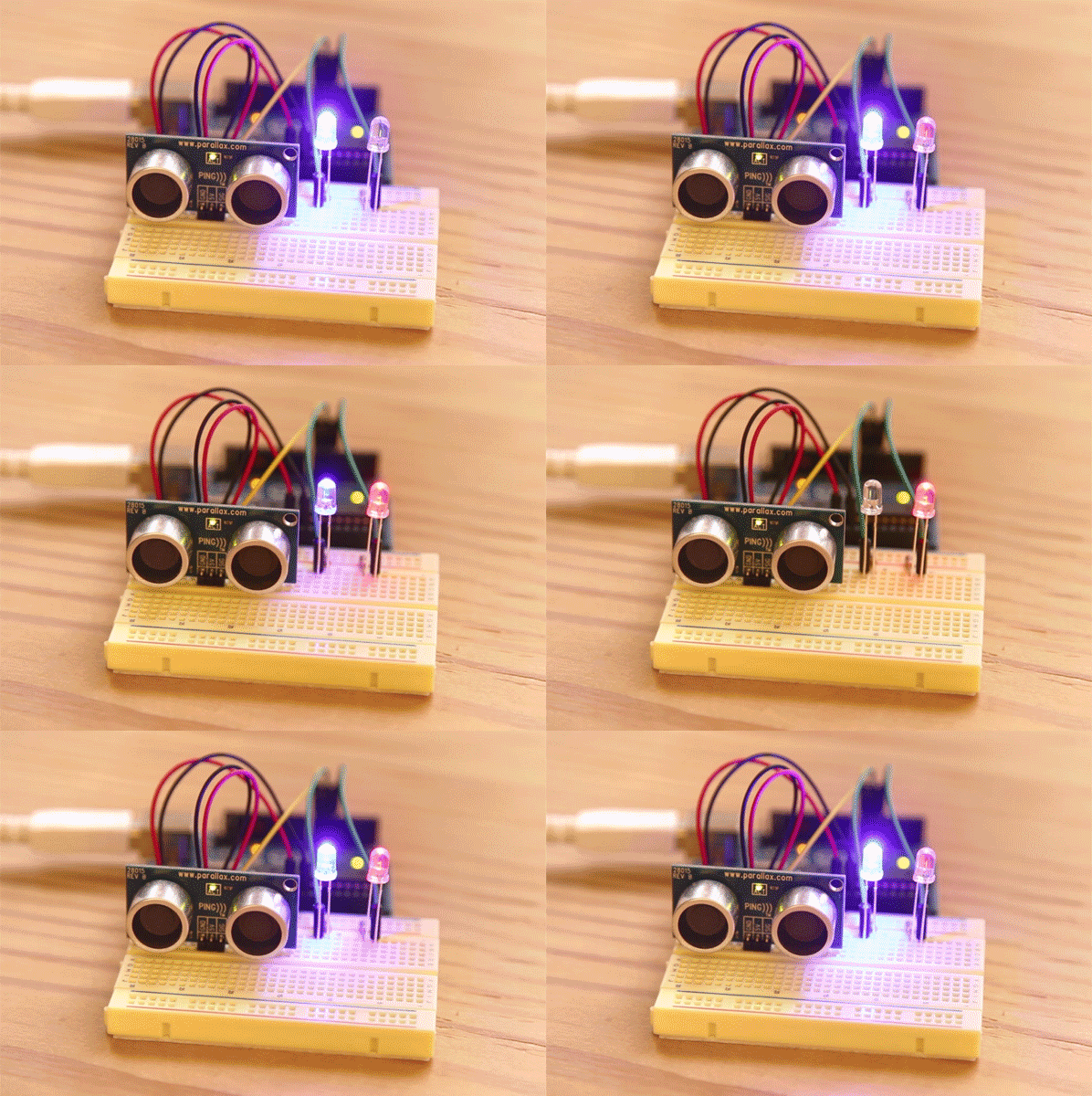
PowerTrain, Electronics and Arduino Interface

Powertrain: Converts energy into movement using motors and gears, enabling the robot to move 

Electronics: Provides the control system, including sensors, power management, and communication modules to handle signals and power distribution.

Arduino Interface: Acts as the main controller that processes inputs from sensors and controls the motors, allowing easy interaction between all hardware components.

Together, they create an intelligent and controllable system capable of interacting with the environment.

ExpoTec Level 1 TopX
Design programming & Algorithm

Intermediate Programming Courses

Design programming and algorithms focus on creating efficient solutions to problems. It involves structuring code and selecting the best algorithms to achieve optimal performance. Algorithms are step-by-step procedures used to process data, solve problems, or perform computations, while good design ensures clarity, efficiency, and scalability in the program's structure. Together, they form the foundation for building reliable, efficient software solutions.

Level 3 ExpoTec TopX Programming
Raspberry pi and Linux

Description

Students make an important transition from Microcontroller-Based Systems to Computer-Based Engineering Systems.

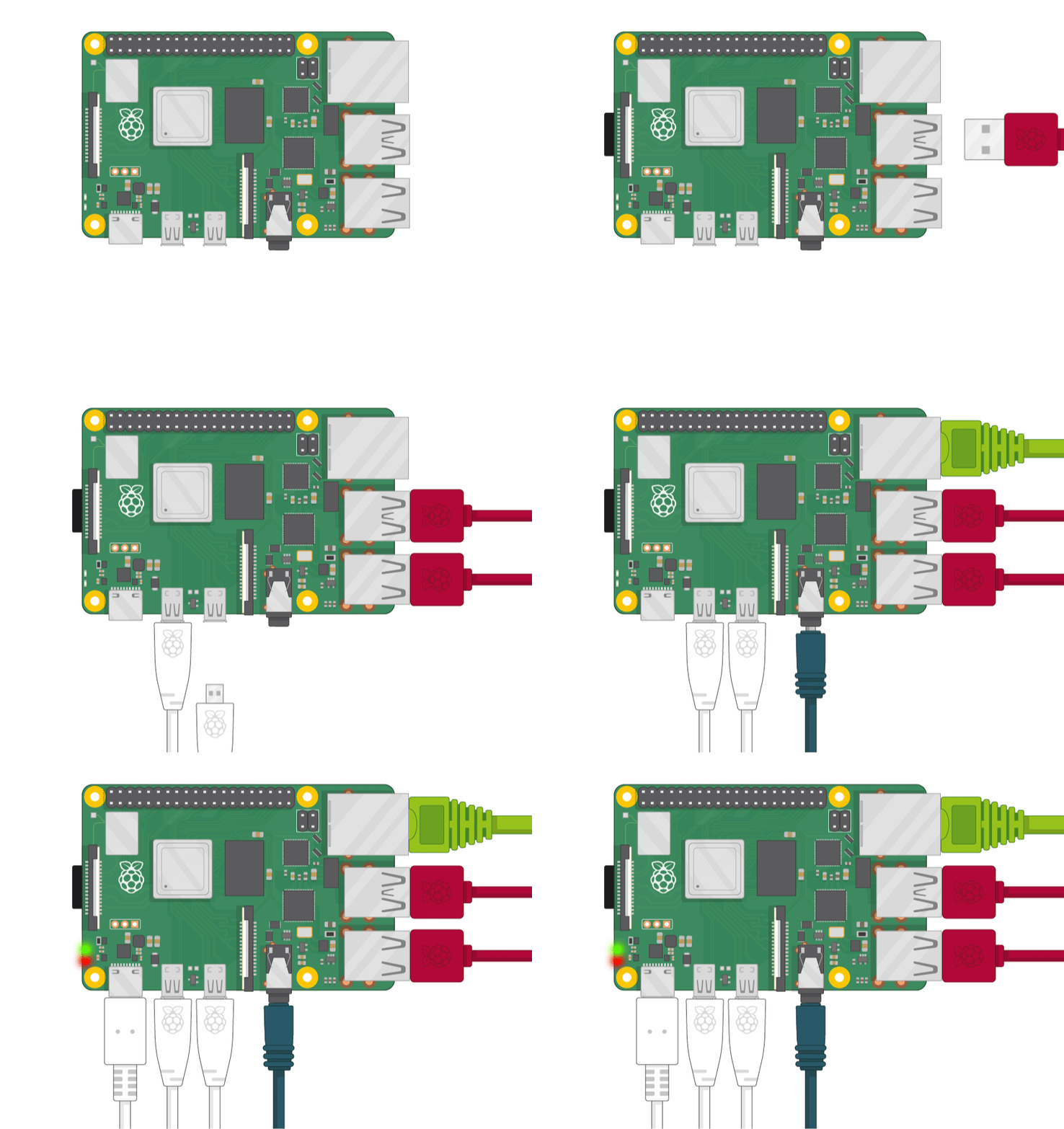
Using Raspberry Pi, students discover how a complete Linux computer can interact directly with electronic hardware.

They learn the fundamentals of the Linux Operating System, terminal commands, files and directories, software installation, Python environments, and the basic management of a Raspberry Pi system.

Students then connect their previous electronics knowledge to Raspberry Pi through GPIO, interfacing buttons, sensors, motors, displays, and other electronic devices.

However, unlike their earlier Arduino systems, students now have access to a full operating system, allowing them to run multiple software components, store and process larger amounts of data, connect to networks, and build richer applications.

Students also develop Graphical User Interfaces (GUI) for their engineering projects, allowing users to monitor and control machines through complete software interfaces.

Learning Objectives

By the end of the course, students will be able to:

  • Understand the difference between a Microcontroller and a Single-Board Computer.
  • Understand the basic architecture of Raspberry Pi.
  • Install and configure Raspberry Pi OS.
  • Understand the fundamentals of Linux.
  • Navigate the Linux File System.
  • Use common Terminal Commands.
  • Create, move, copy, and manage files and directories.
  • Install and manage software packages.
  • Run and manage Python programs on Linux.
  • Understand basic processes and system resources.
  • Understand Raspberry Pi GPIO.
  • Configure GPIO Pins as Inputs and Outputs.
  • Interface Buttons and Digital Devices.
  • Read sensors using Raspberry Pi.
  • Control LEDs, Motors, Servos, and other Actuators.
  • Interface external electronic modules.
  • Understand basic communication between Raspberry Pi and external hardware.
  • Store and process project data.
  • Develop Python-based engineering applications.
  • Build Graphical User Interfaces.
  • Connect GUI controls to physical hardware.
  • Display sensor and machine information through software dashboards.
  • Integrate Hardware + Linux + Python + GUI into one complete system.
ExpoTec Level 2 TopX
PowerTrain & Gear Design
ExpoTec Level 2 TopX
Game & Mobile App Development using MIT App Inventor

MIT App Inventor teaches kids how to create their own mobile games in a user-friendly, visual programming environment. Kids will learn the basics of game design, including graphics, sound, and interactive elements, by dragging and dropping blocks to code their games.

STARtec L3 TopX STARtec L2
Mechanical Designing using TinkerCad

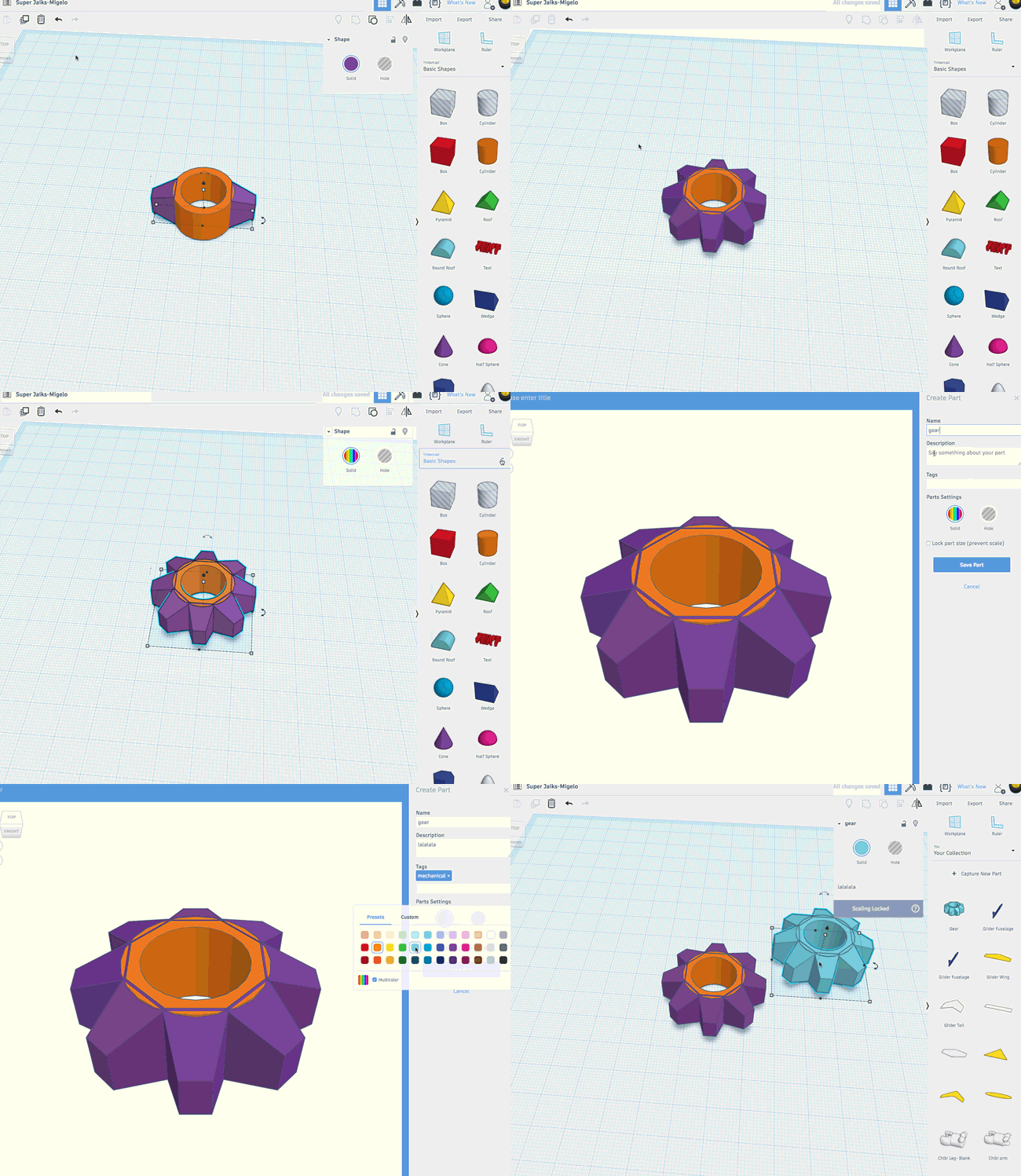
 A mechanical design course using Tinkercad for kids introduces them to 3D modeling and design, allowing them to create mechanical parts like gears and simple machines. Kids learn how to design in a virtual environment, and then use a 3D printer or laser cutting machine to manufacture their designs in real life and assembling the parts together.

StarTec Level 1 TopX
PCB Design & Fabrication

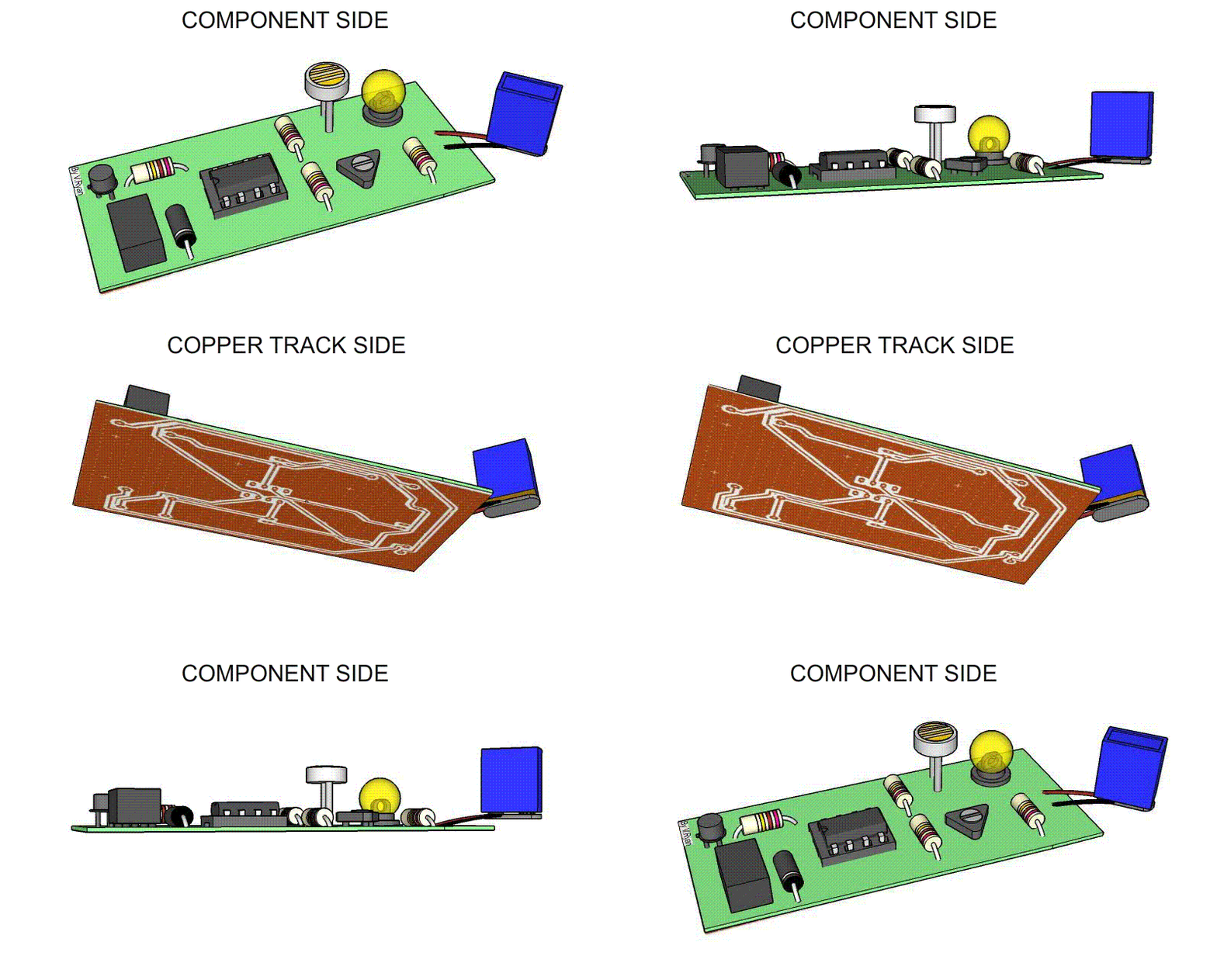
 Introduces kids to the basics of creating printed circuit boards (PCBs) in a fun and interactive way. Students will learn how to design circuits, arrange components, and create PCB layouts using Fritzing's user-friendly interface. The course covers essential concepts like electrical connections and soldering, allowing kids to bring their designs to life by fabricating real PCBs.

StarTec TopX Level 2
Front-End Development

 A mechanical design course using Tinkercad for kids introduces them to 3D modeling and design, allowing them to create mechanical parts like gears and simple machines. Kids learn how to design in a virtual environment, and then use a 3D printer or laser cutting machine to manufacture their designs in real life and assembling the parts together.

ExpoTec Level 2 TopX
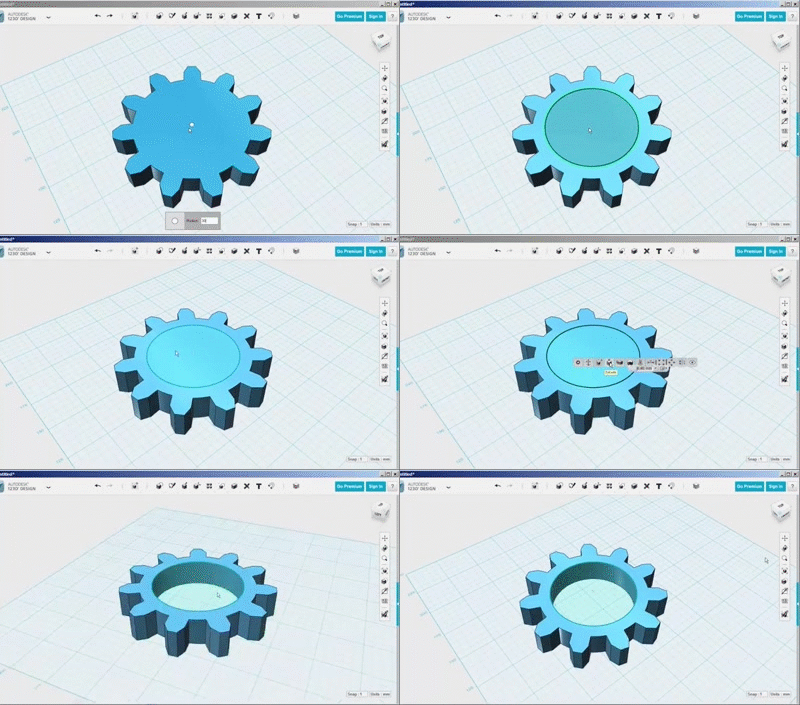
Mechanical Designing using 123D

  Students will learn how to create and manipulate 3D shapes, design mechanical parts, and assemble them into complex models. Through hands-on projects, they will explore concepts like dimensions, tolerances, and design aesthetics. This course encourages creativity and critical thinking while providing a solid foundation in engineering principles, making mechanical design engaging and accessible for young learners.

StarTec TopX Level 3 Level 4
Front-End Development

 A mechanical design course using Tinkercad for kids introduces them to 3D modeling and design, allowing them to create mechanical parts like gears and simple machines. Kids learn how to design in a virtual environment, and then use a 3D printer or laser cutting machine to manufacture their designs in real life and assembling the parts together.

Level 3 Level 4 StarTec TopX
Mobile App Development

 A mechanical design course using Tinkercad for kids introduces them to 3D modeling and design, allowing them to create mechanical parts like gears and simple machines. Kids learn how to design in a virtual environment, and then use a 3D printer or laser cutting machine to manufacture their designs in real life and assembling the parts together.

TopX Level 2 ExpoTec