EXPOtec - Level 1
ExpoTec Level 1 marks the student's transition from learning technology fundamentals to designing and building complete engineering systems.
Throughout this level, students learn how programming, electronics, mechanical design, robotics, and system integration work together to create real technological products.
Students begin with C++ Programming and Arduino, learning how software can interact with the physical world through sensors, motors, displays, and other electronic devices. They apply these skills to build complete systems such as a Smart Greenhouse, Irrigation System, Radar System, Parking System, and Elevator.
They then progress into Mobile Robotics, where they experience the complete process of building an autonomous machine. Students design the robot's mechanical structure, develop its electronic system and control board, integrate motors and sensors, and write the software required for the robot to sense its environment, make decisions, and operate autonomously.
Finally, students apply their electronics and programming knowledge to build a DIY Mobile Phone inspired by classic mobile phones. They develop the device software themselves, including its user interface, menus, icons, applications, navigation system, and games such as Snake.
By the end of the level, students begin to understand technology not as separate topics or components, but as complete systems that can be designed, built, programmed, tested, and improved.
Select your Course

First Course/
Arduino & Electronics Interfacing using C++ Part 1
Learn how to program Arduino using C++, interface with sensors and actuators, and build complete smart electronic systems.
Core Projects:
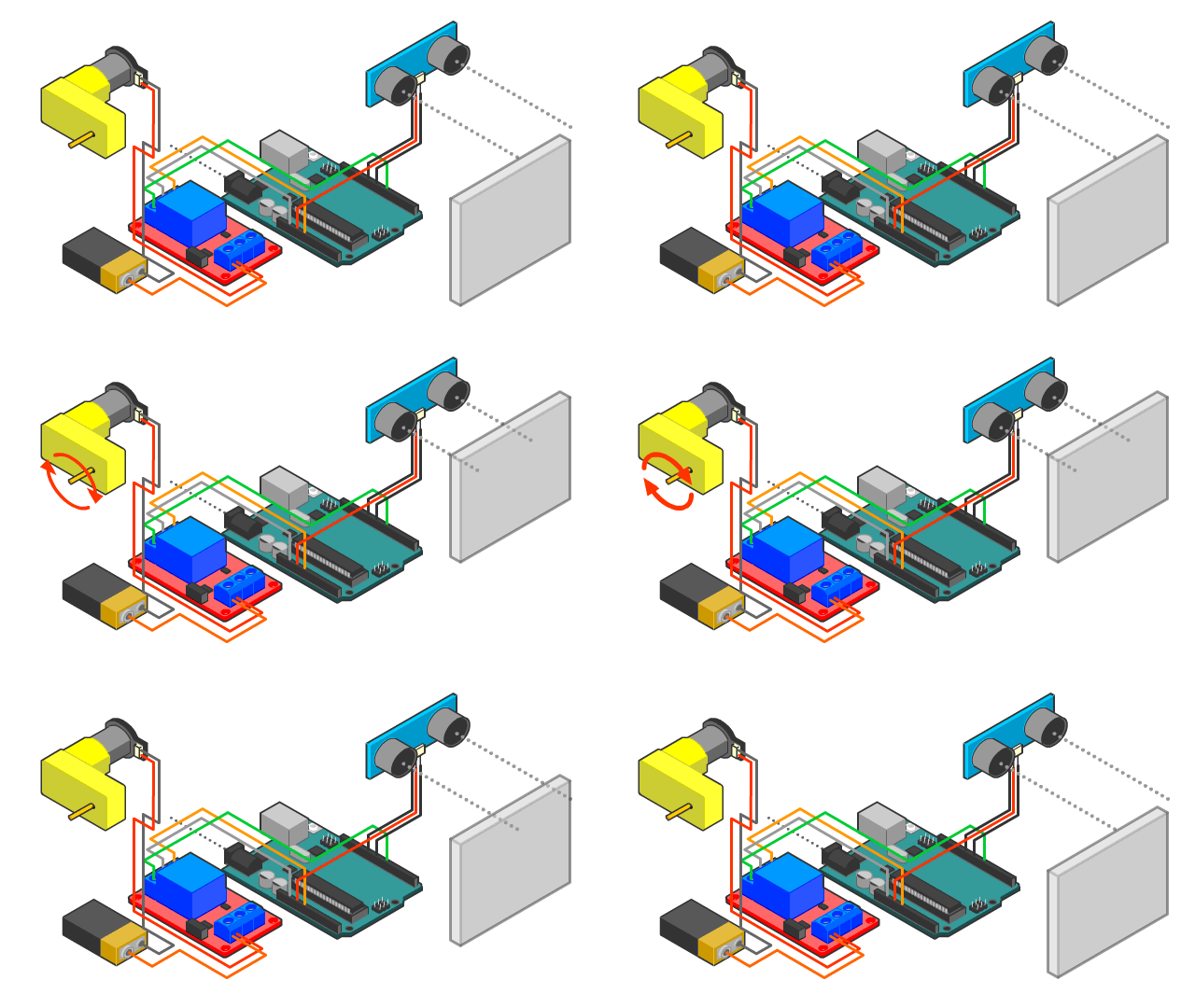
- Smart Irrigation System — Monitor conditions and automatically control irrigation.
- Smart Greenhouse — Combine multiple sensors and actuators to control a greenhouse environment.
- Radar System — Use sensing and movement to detect objects and visualize their positions.
- Smart Parking System — Detect vehicle presence and manage parking availability and entry.
- Elevator System — Build the control logic for floors, buttons, movement, and indications.
Second Course/
Autonomous Mobile Robotics
Design, build, program, and test autonomous mobile robots by integrating mechanics, electronics, sensors, and software.
Core Projects:
- Mechanical & electronics designing and fabrication using 3d printer and laser cutting machine.
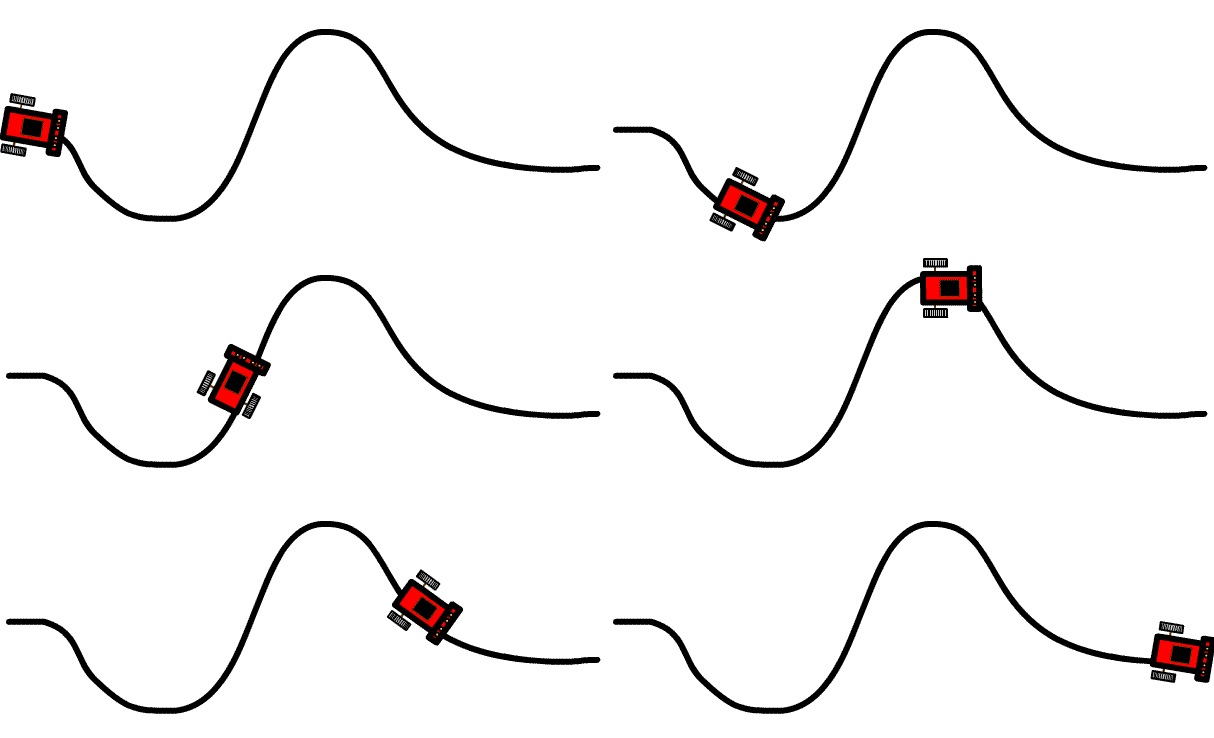
- Line Follower Robot — Design and program a robot capable of detecting and following a path autonomously.
- Obstacle Avoidance Robot — Build a robot that senses obstacles and makes navigation decisions without human control.
- Autonomous Cleaner Robot — Combine movement, sensing, navigation, and mechanical design to create a robot designed to perform a practical cleaning task.
Third Course/
DIY Mobile Phone
Build a functional handheld electronic device and develop its user interface, applications, menus, and games from scratch.
Core Projects:
- Home Screen & Main Menu — Design the main interface and navigate through different phone functions.
- Contacts Application — Create and navigate a simple contacts interface.
- Calculator Application — Build an interactive calculator controlled through the keypad.
- Settings Menu — Develop configurable options and multiple menu levels.
- Digital Clock / Utility App — Display useful information through a dedicated application.
What Level Will the Student Reach?
By the end of ExpoTec Level 1, the student moves beyond simply using Arduino, connecting sensors, or writing individual programs.
The student reaches the level of a:
Junior Engineering System Builder
At this stage, students can understand a technological system as a combination of interconnected engineering disciplines and begin building complete solutions to defined problems.
They learn to approach projects through an engineering process:
Problem → Requirements → Design → Build → Program → Integrate → Test → Debug → Improve
Instead of asking only:
“How do I connect this sensor?”
or:
“What code makes this motor move?”
students begin asking:
“What system should I design to solve this problem?”
This shift in thinking is one of the most important outcomes of ExpoTec Level 1.
Engineering Skills Developed
C++ Programming & Software Development
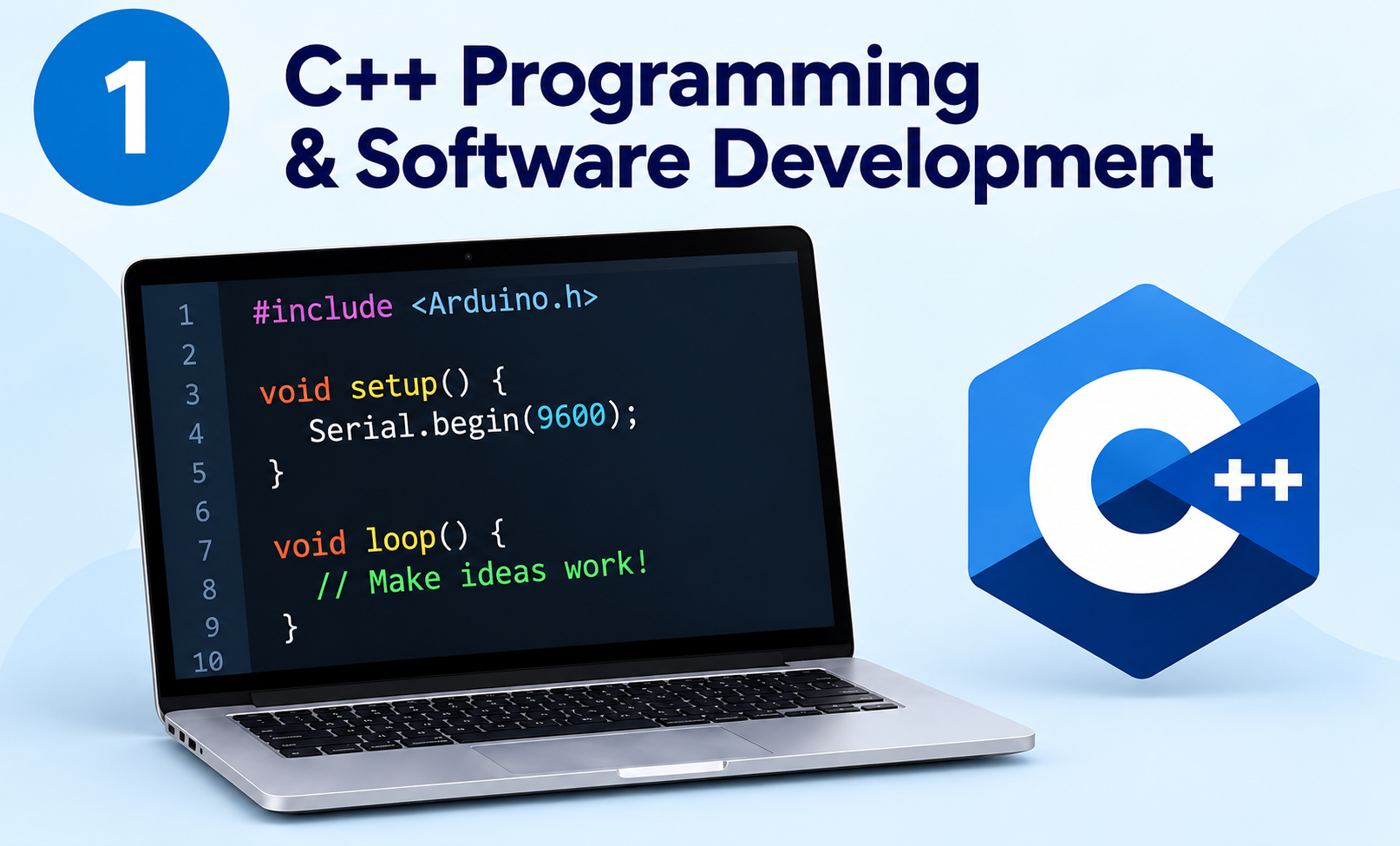
Students develop a strong foundation in C++ programming and learn to use programming as a tool for creating real systems.
They work with programming concepts such as variables, data types, operators, conditions, loops, functions, and arrays.
As their projects become more advanced, students also learn to organize larger programs, implement system logic, process user input, and develop interactive software.
Electronics & Embedded Systems
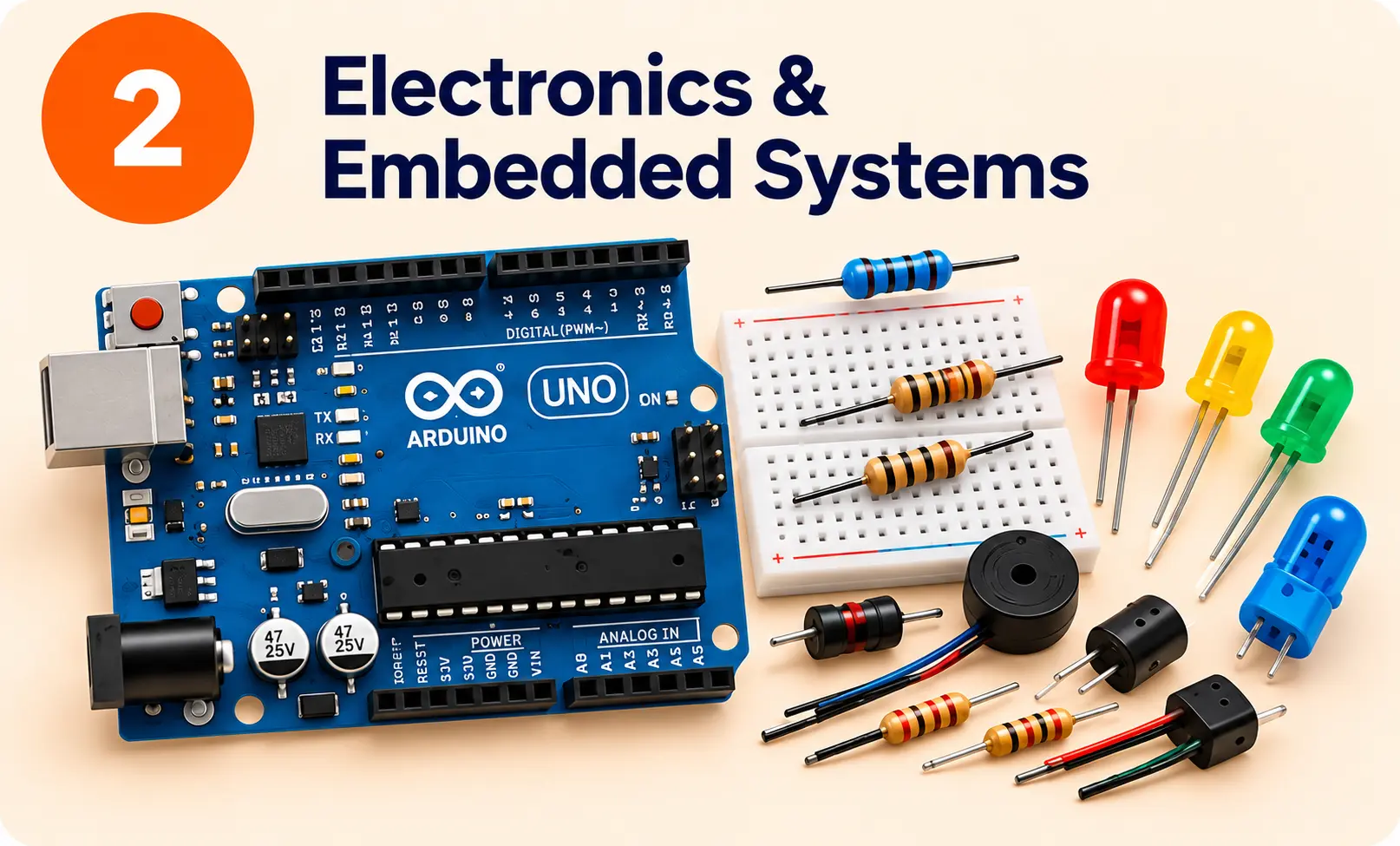
Students understand how software and electronics interact.
They learn to work with digital and analog signals and interface Arduino with sensors, motors, Servo Motors, displays, buttons, buzzers, and other electronic devices.
They progress from controlling individual components to building complete embedded systems capable of sensing, processing information, making decisions, and performing actions.
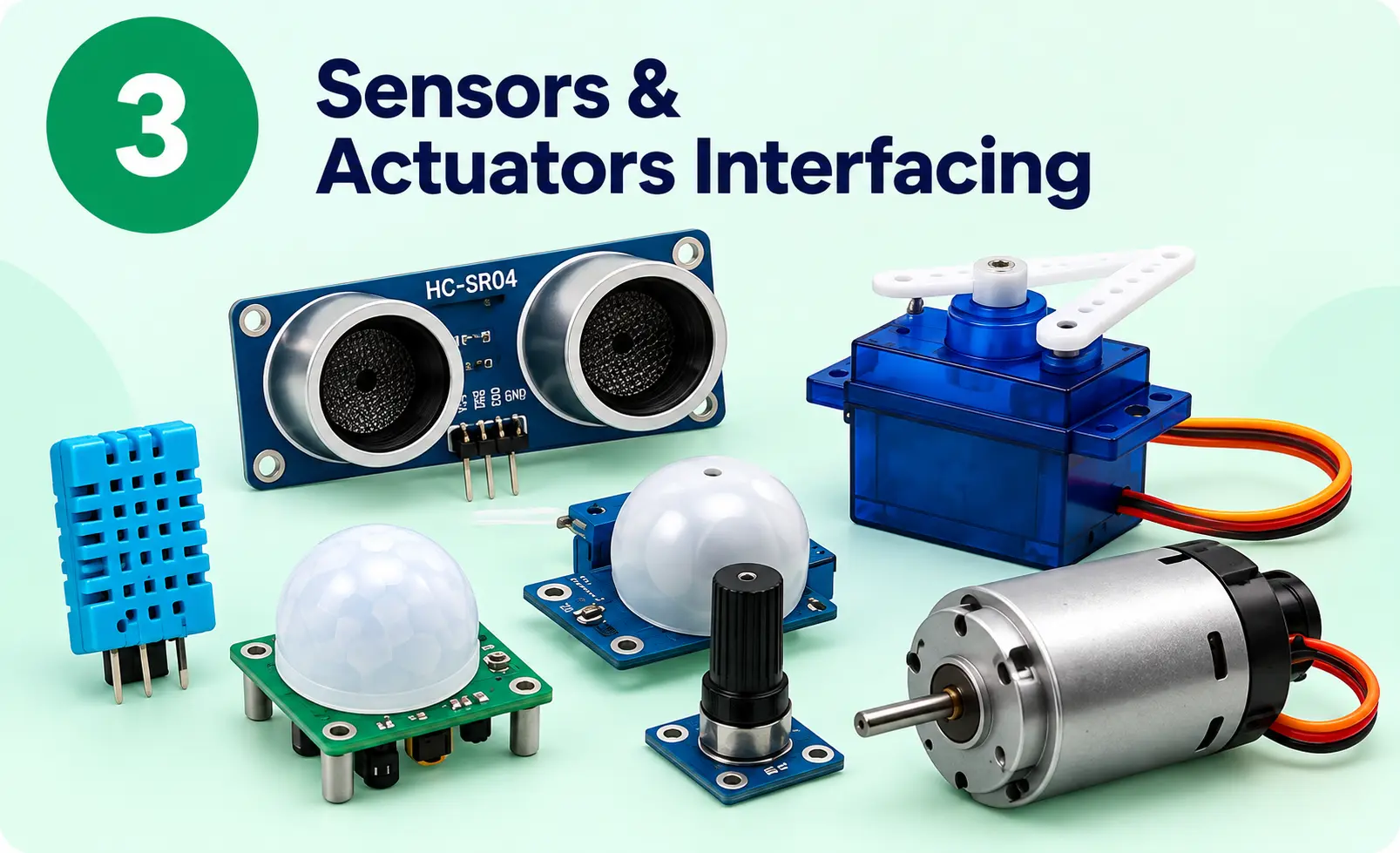
Sensors & Actuators Interfacing
Students learn how technological systems interact with the physical world.
They use different sensors to collect information from the environment and actuators to create physical responses.
This teaches them the fundamental engineering cycle:
Sense → Process → Decide → Act
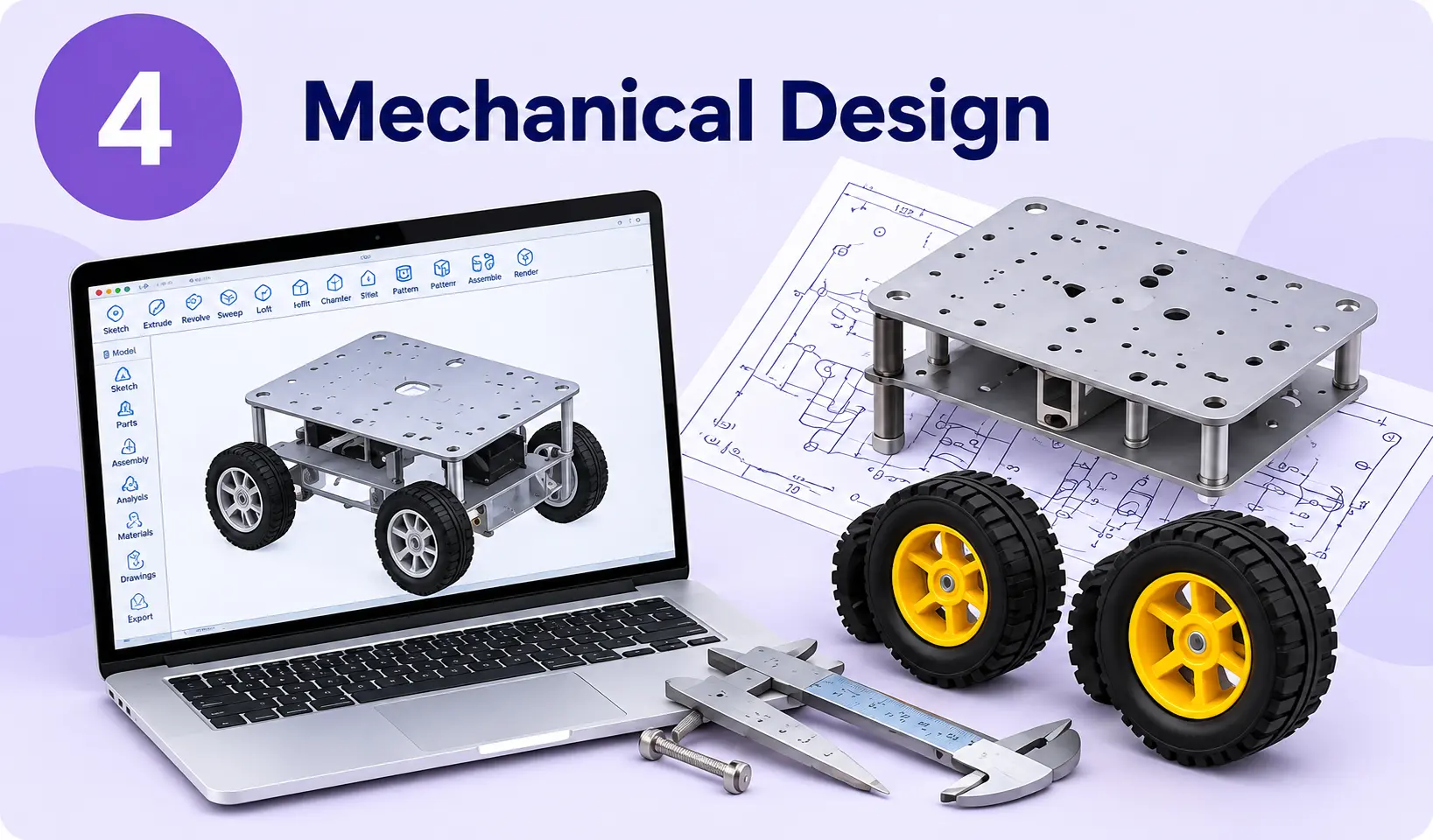
Mechanical Design
Students are introduced to the mechanical engineering side of product and robot development.
They learn to design robot structures, consider the placement of electronic components, motors, sensors, and mechanical parts, and understand how mechanical design affects the performance of the complete system.
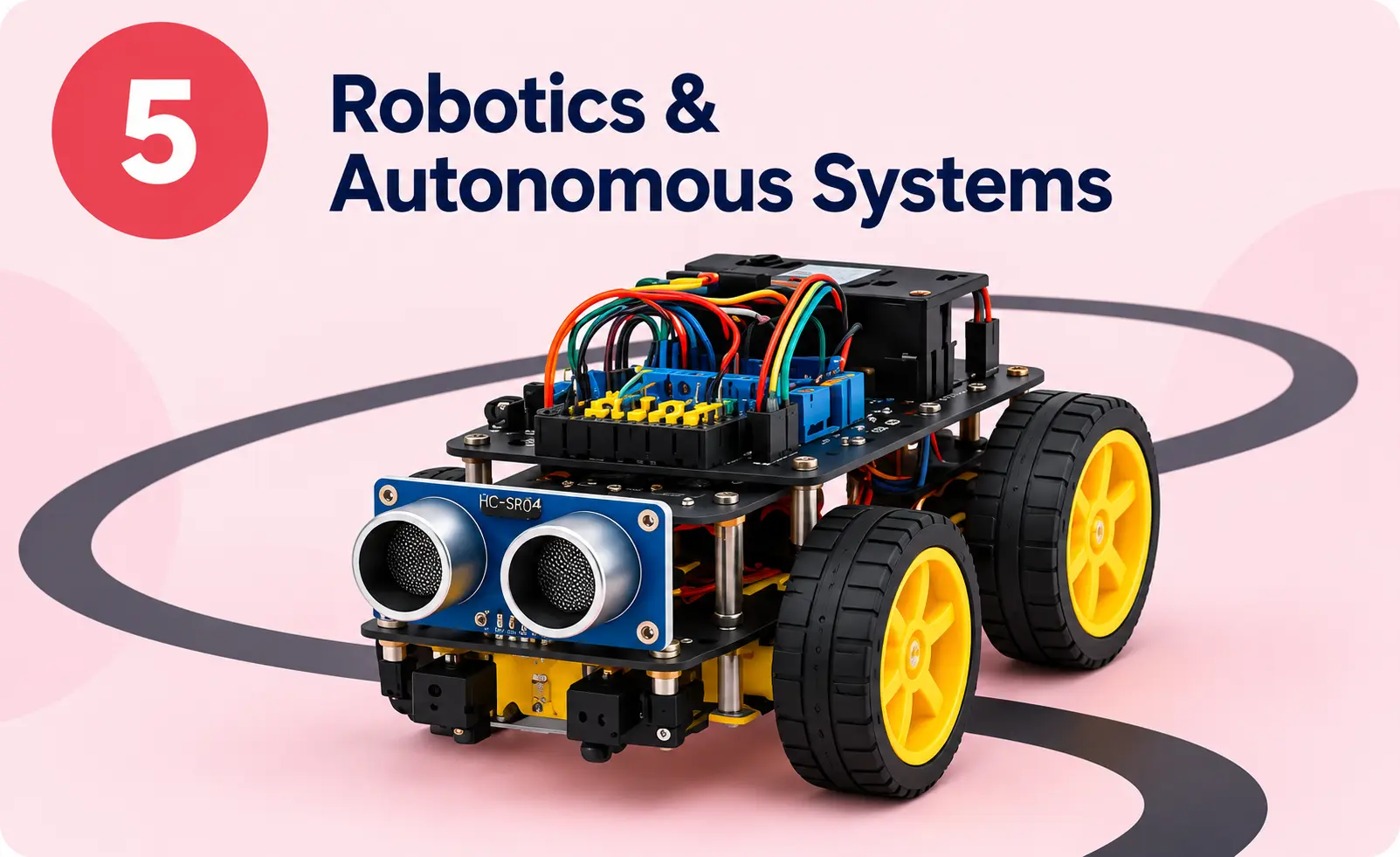
Robotics & Autonomous Systems
Students progress from controlling individual motors to developing complete autonomous mobile robots.
They learn how robots use sensors to understand their surroundings, process information, make decisions, and control their movement without continuous human intervention.
They apply these concepts through robots designed for tasks such as:
Line Following — Obstacle Avoidance — Autonomous Cleaning
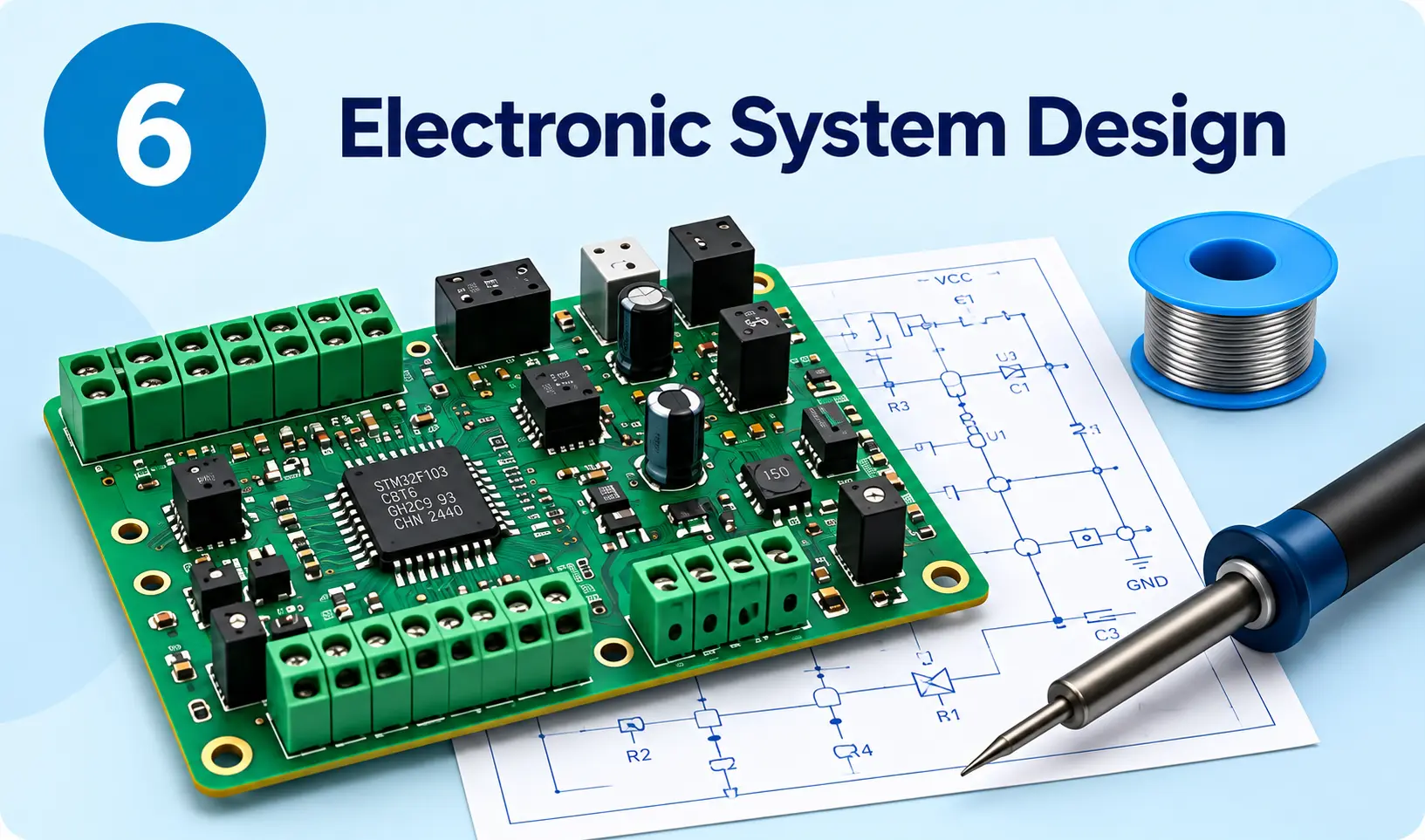
Electronic System Design
Students begin thinking beyond individual electronic components and start understanding electronics as a complete system architecture.
They learn how to identify system requirements, select appropriate components, organize connections, manage power distribution, integrate controllers, sensors, and actuators, and build electronic control boards for their robots.
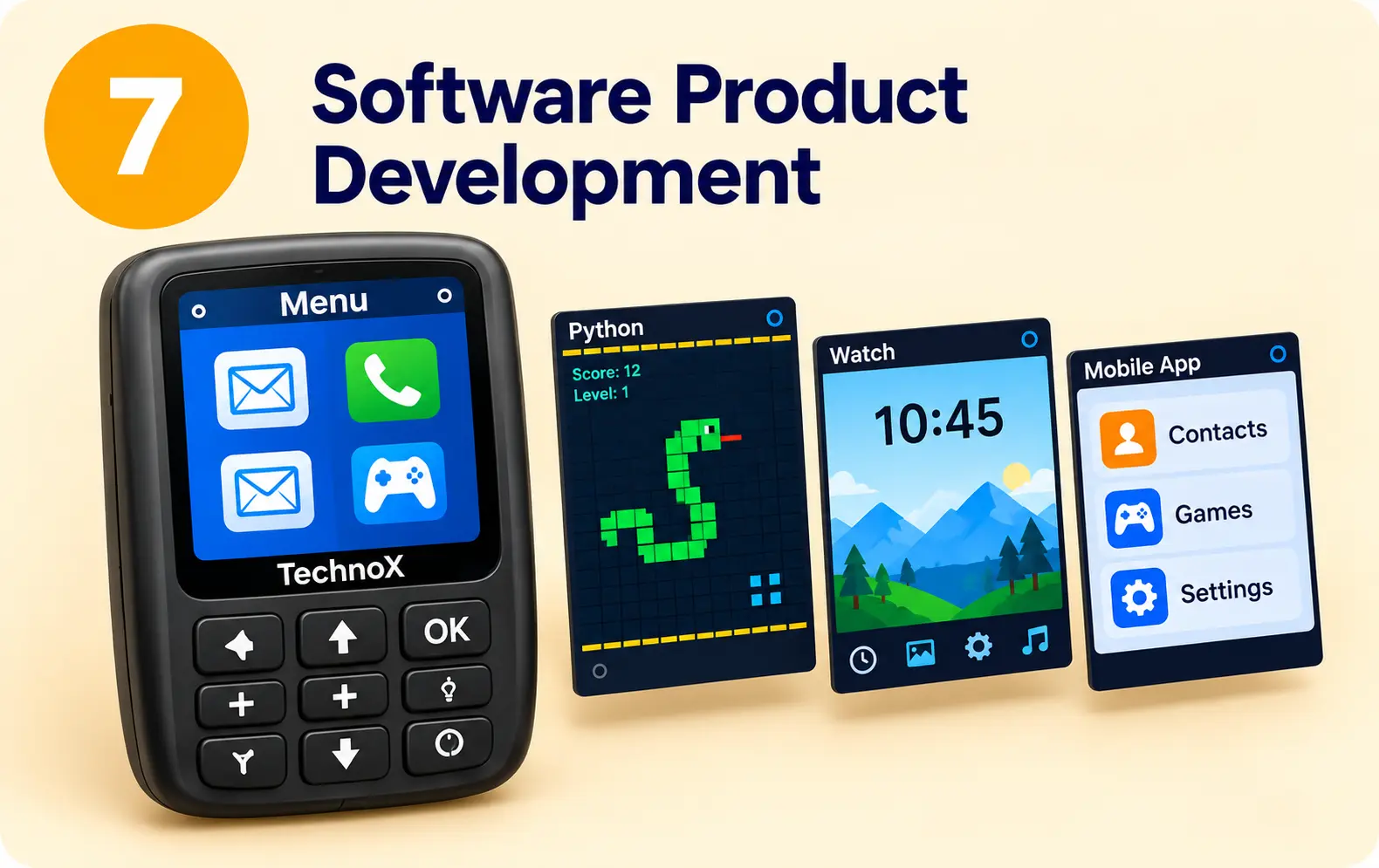
Software Product Development
Through the DIY Mobile Phone, students discover that programming is not limited to controlling hardware.
They learn how software can transform electronic hardware into an interactive product.
Students develop screens, menus, icons, navigation systems, applications, and games while learning how multiple software functions can work together inside a single device.
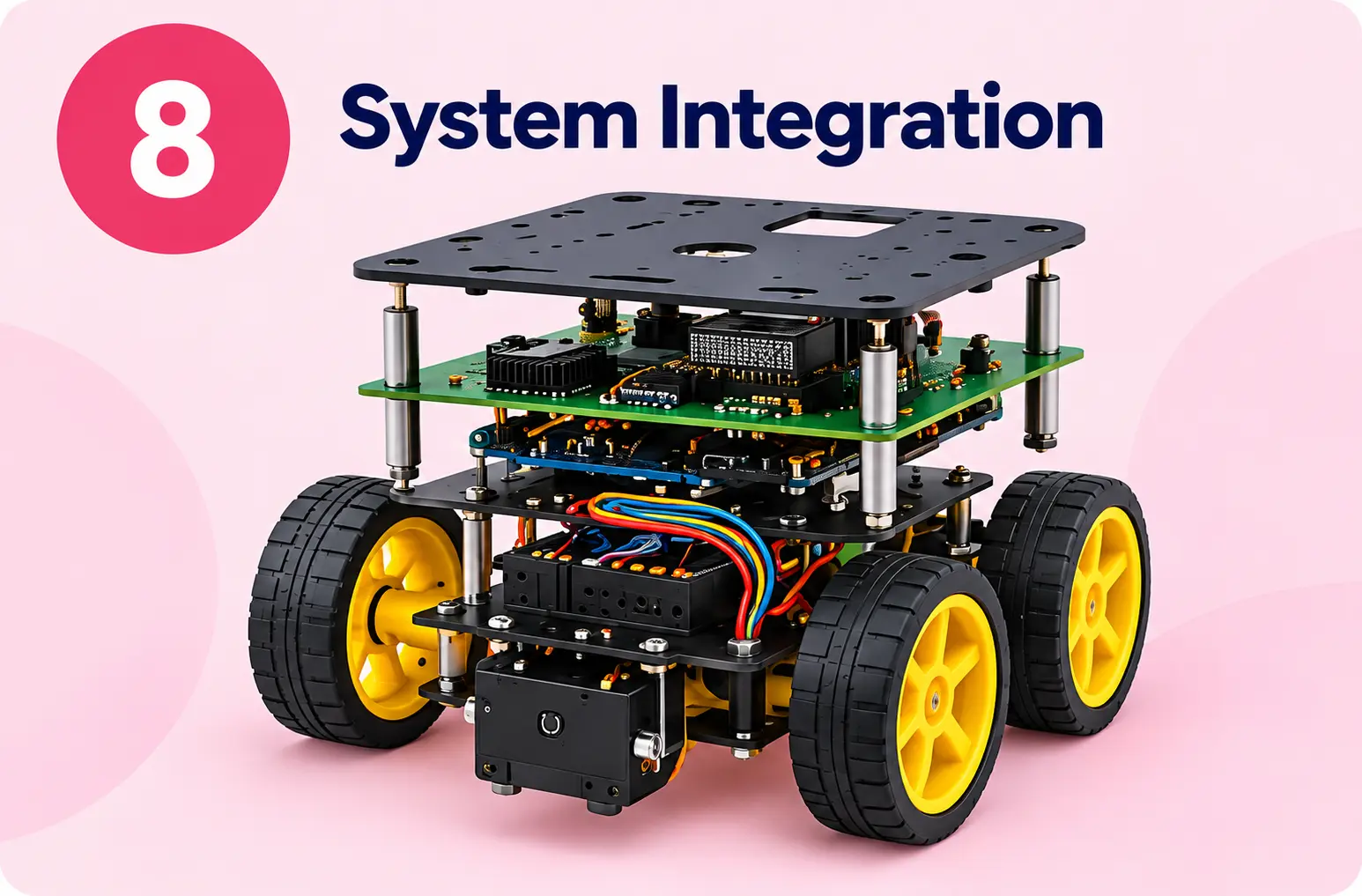
System Integration
One of the most important skills developed during ExpoTec Level 1 is the ability to combine multiple engineering disciplines into one working system.
Students learn to integrate:
Mechanical Design + Electronics + Embedded Programming + Sensors + Actuators + Software
They also learn how problems can appear when different subsystems are combined and how to identify, test, and solve these integration problems.
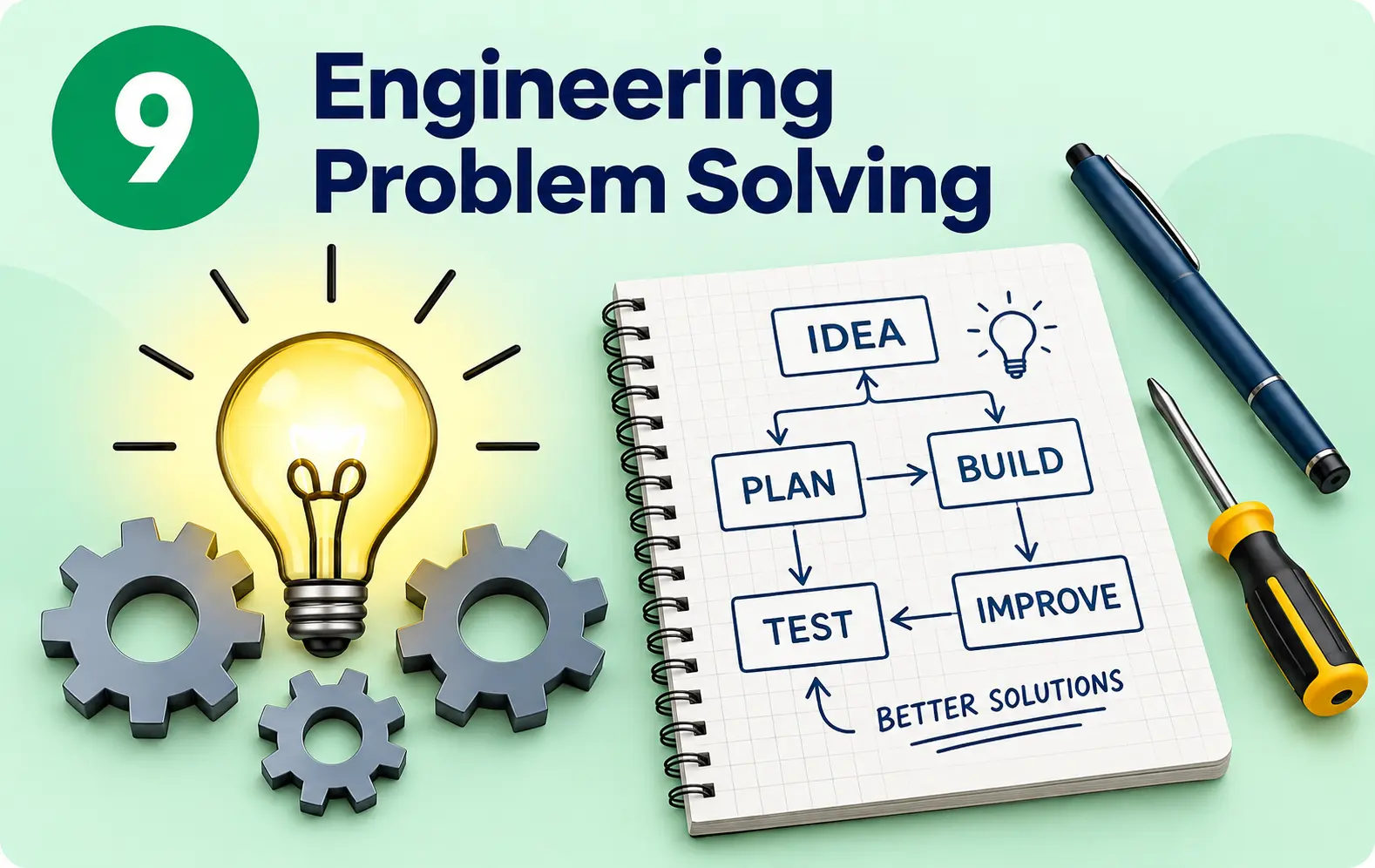
Engineering Problem Solving
Students gradually move away from simply following predefined instructions and begin developing an engineering approach to problem solving.
They learn to ask:
- What problem am I trying to solve?
- What information does my system need?
- Which sensors should I use?
- Which actuators are required?
- What decisions should the software make?
- How should the system behave?
- How can I test whether my solution works correctly?
- How can I improve my design?
Through this process, students develop analytical thinking, experimentation, debugging, testing, and iterative improvement skills.
What Can Students Build After Level 1?
By completing ExpoTec Level 1, students gain the engineering foundation required to design and build systems such as:
- Smart Greenhouse
- Smart Irrigation System
- Radar System
- Smart Parking System
- Elevator Control System
- Line Follower Robot
- Obstacle Avoidance Robot
- Autonomous Cleaner Robot
- DIY Mobile Phone
More importantly, students begin developing the ability to use the same engineering skills to create and explore their own project ideas, rather than being limited to projects they have already built.
Student Transformation
ExpoTec Level 1 is not designed around memorizing how to build a fixed collection of projects.
It is designed to change how students think about technology.
At the beginning:
“How do I connect this component?”
“What code should I write?”
“How do I make this motor move?”
By the end:
“What am I trying to build?”
“What does the system need to do?”
“What mechanical, electronic, and software systems do I need?”
“How can I design, build, test, and improve it?”
The student begins the level as a Technology Learner and completes it with the foundations of an Engineering System Builder.
By the end of ExpoTec Level 1, students don't just understand how technology works — they begin developing the engineering skills required to build it.