كافة الدورات
Through this course, kids learn essential programming concepts such as sequencing, loops, conditionals, arithmetical operations, logical operations and variables. They develop computational thinking skills as they break down problems into smaller steps, plan the execution of actions, and control the behavior of their programs.
Description
Students now bring programming, electronics, sensing, motion, and mechanical construction together to enter the world of Robotics.
Instead of simply operating ready-made robots, students learn how robots are built from the inside out.
They explore every major part of a robotic system, including the Controller, Motor Drivers, Motors, Sensors, Power System, electronic connections, and mechanical structure.
Students build their robots step by step and wire the electronic systems themselves, developing a deeper understanding of how software decisions become physical movement.
Through increasingly challenging robots, students explore Robot Motion, Navigation, Path Planning, Obstacle Avoidance, Line Following, Remote Control, and Autonomous Behavior.
Learning Objectives
By the end of the course, students will be able to:
- Understand the basic architecture of a robotic system.
- Identify the Controller, Sensors, Actuators, Power System, and Mechanical Structure of a robot.
- Understand how electronics, programming, and mechanics interact inside a robot.
- Build and wire a complete mobile robot.
- Connect Arduino to Motor Drivers and DC Motors.
- Control robot movement and direction.
- Program Forward, Backward, Left, Right, and Stop movements.
- Understand basic Differential Drive behavior.
- Control robot speed and direction.
- Understand the concept of Robot Navigation.
- Plan simple movement paths.
- Develop a Path Planning Robot.
- Use Sensors to detect obstacles.
- Program autonomous Obstacle Avoidance behavior.
- Understand basic Line Detection.
- Build and tune a Line Follower Robot.
- Remotely control a robot through a Mobile Application.
- Compare Manual, Remote-Controlled, and Autonomous Robots.
- Design robots for specific tasks.
- Build a Forklift Robot.
- Build a Cleaner Robot.
- Test and troubleshoot complete robotic systems.
- Improve robot behavior through experimentation and iteration.
- Understand the basic autonomous loop of Sense → Decide → Move → Re-evaluate.
- Integrate Programming + Electronics + Sensors + Motion + Mechanics into one robotic system.
In this course, They learn to write code that controls electronic components like sensors, and Actuators. This allows them to translate the voltage signals to code responding to the inputs, display information, and control movement which makes them able to design and create the following Projects:
- Irrigation System Project
- Lightening System Project
- Laser security system project
- Fish Feeder
- Radar Project
- Smart Dustbin Project
- Smart Water Dispenser Project
- Smart Train Gate Project
Introductory Programming Courses
This course is designed to introduce students to the basics of programming using C++. It is aimed at beginners with little to no programming experience, providing a solid foundation in C++ syntax, semantics, and programming techniques. By the end of the course, students will be able to write simple to moderately complex programs in C++.
In this course, They learn to write code that controls electronic components like sensors, and Actuators. This allows them to translate the voltage signals to code responding to the inputs, display information, and control movement.
Description:
Students move from building stationary embedded systems to designing complete autonomous machines.
They explore the engineering process behind a mobile robot, starting with its mechanical structure and chassis, then designing its electronic system and robot control board, integrating motors and sensors, and finally developing the software that controls its behavior.
Students learn that a robot is not simply a collection of components. It is an integrated engineering system in which mechanics, electronics, sensing, and programming must work together.
Different robotic challenges introduce students to navigation, environmental sensing, decision-making, and autonomous behavior.
By the end of the course, students experience the complete process of turning an engineering idea into a working autonomous robot.
Learning Objectives
By the end of the course, students will be able to:
- Understand the basic architecture of a mobile robot.
- Identify the mechanical, electronic, sensing, and software subsystems of a robot.
- Understand basic principles of robot locomotion.
- Design a mechanical chassis for a mobile robot.
- Consider component placement during mechanical design.
- Select and integrate motors and wheels.
- Understand basic robot power distribution.
- Design the electronic architecture of a robot.
- Design and assemble a robot control board.
- Interface motors with motor drivers.
- Integrate different sensors into a mobile robot.
- Control robot direction and movement.
- Use sensor information to control robot behavior.
- Develop autonomous decision-making logic.
- Understand basic line-following behavior.
- Implement obstacle detection and avoidance.
- Design robot behavior according to a specific task.
- Test and troubleshoot mechanical, electronic, and software problems.
- Integrate mechanics, electronics, and programming into one complete robotic system.
Learn programming tools and fundamentals to be able to write codes for future STEM projects
Description:
Students are introduced to Arduino as the “brain” of a smart system.
Instead of controlling projects manually, students discover how sensors allow machines to understand their surroundings and how simple programs allow the system to decide what action to take.
Many projects intentionally revisit ideas from Electronics Projects and transform them from manual systems into intelligent automated systems.
Learning Objectives
By the end of the course, students will be able to:
- Understand Arduino as a programmable controller.
- Understand the relationship between Input → Processing → Output.
- Write and modify simple Arduino programs.
- Control LEDs, buzzers, motors, and servos using code.
- Understand digital inputs and outputs at an introductory level.
- Read information from simple sensors.
- Understand the purpose of different sensors.
- Use conditions to make simple decisions.
- Understand the concept of If this happens → Do that.
- Replace manual controls with sensor-based automatic control.
- Combine a sensor, Arduino, and actuator into a complete system.
- Observe sensor readings and relate them to the physical world.
- Troubleshoot basic Arduino projects.
- Explain why a smart system behaves in a particular way.
An electronics course for kids introduces them to the basics of circuits and programming. Kids will use Tinkercad to design and simulate circuits with components like LEDs, resistors, and Arduino without needing physical parts. They will learn how to connect components, write simple code, and see their projects come to life.
Powertrain: Converts energy into movement using motors and gears, enabling the robot to move
Electronics: Provides the control system, including sensors, power management, and communication modules to handle signals and power distribution.
Arduino Interface: Acts as the main controller that processes inputs from sensors and controls the motors, allowing easy interaction between all hardware components.
Together, they create an intelligent and controllable system capable of interacting with the environment.
Build, Code, and Innovate with Sensor-Based Robots, Mastering Real-World Problem-Solving like front collision avoidance system.
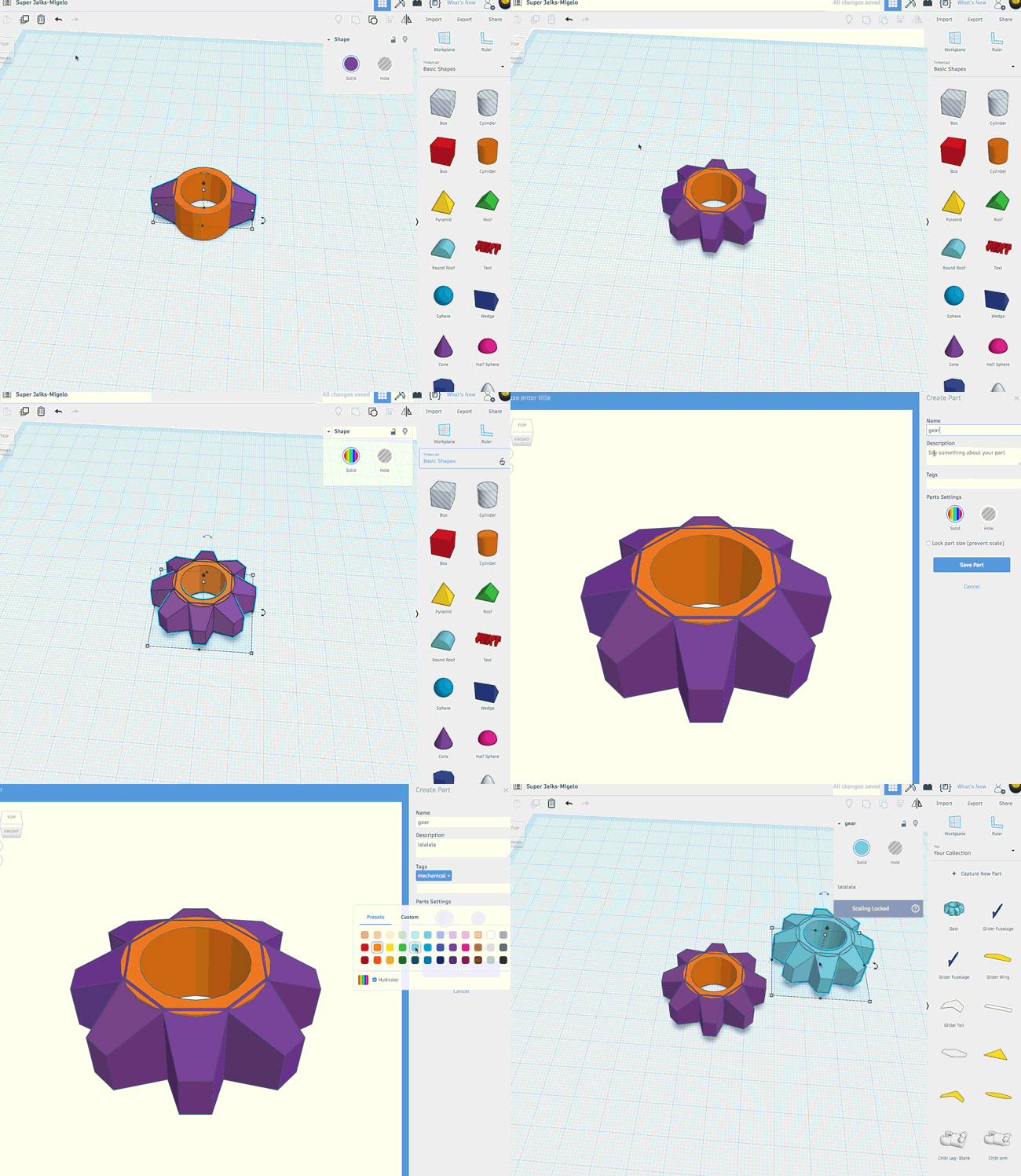
A mechanical design course using Tinkercad for kids introduces them to 3D modeling and design, allowing them to create mechanical parts like gears and simple machines. Kids learn how to design in a virtual environment, and then use a 3D printer or laser cutting machine to manufacture their designs in real life and assembling the parts together.
Introductory Programming Courses
This course is designed to introduce students to the basics of programming using C++. It is aimed at beginners with little to no programming experience, providing a solid foundation in C++ syntax, semantics, and programming techniques. By the end of the course, students will be able to write simple to moderately complex programs in C++.
Description:
Students begin their journey into embedded systems by learning the fundamentals of C++ programming and applying them directly to Arduino-based electronic systems.
They learn how a microcontroller interacts with the physical world through digital and analog inputs and outputs, sensors, motors, servos, displays, and other electronic devices.
Instead of learning programming and electronics as separate topics, students combine them to build complete systems that can sense their environment, make decisions, and perform actions.
Throughout the course, students progress from basic circuits and programs to real engineering projects such as automated irrigation, smart greenhouses, radar systems, parking systems, and elevators.
Learning Objectives
By the end of the course, students will be able to:
- Understand the basic structure and operation of a microcontroller-based system.
- Understand the fundamentals of C++ programming.
- Use variables, data types, operators, conditions, loops, functions, and arrays.
- Understand the structure of an Arduino program.
- Work with digital inputs and outputs.
- Read and process analog signals.
- Interface different sensors with Arduino.
- Control LEDs, buzzers, DC motors, and Servo Motors.
- Understand the difference between sensors and actuators.
- Read sensor data and convert it into useful information.
- Build decision-making logic based on sensor readings.
- Combine multiple inputs and outputs within one system.
- Break a large engineering problem into smaller programmable functions.
- Debug basic hardware and software problems.
- Design and build complete Arduino-based embedded systems.
Description
Students continue their embedded systems journey by exploring how modern electronic systems communicate, measure motion, determine position, and control movement accurately.
They learn wired and wireless communication concepts and work with technologies such as Bluetooth, NRF wireless communication, and Wi-Fi to exchange data between controllers and systems.
Students are introduced to navigation and motion sensing using IMU and GPS modules, allowing their systems to understand orientation, movement, and geographical position.
They also explore Wheel Encoders to measure motor movement and RPM and discover the difference between Open-Loop and Closed-Loop Control.
Using feedback from encoders, students are introduced to PID Control, learning how a system can continuously measure its error and automatically adjust its output to achieve more accurate and stable motion.
Stepper Motors and their drivers are also introduced, preparing students for precise motion-control applications used later in robotics and manufacturing machines.
Learning Objectives
By the end of the course, students will be able to:
- Understand the purpose of communication between embedded systems.
- Understand fundamental wired and wireless communication concepts.
- Work with common communication protocols.
- Establish communication between multiple microcontrollers.
- Use Bluetooth modules for wireless communication.
- Use NRF modules for wireless data transmission.
- Connect embedded systems through Wi-Fi.
- Send and receive structured data between devices.
- Understand the fundamentals of robot navigation.
- Interface GPS modules and process positioning data.
- Understand IMU-based motion and orientation sensing.
- Measure Roll, Pitch, and Yaw.
- Develop orientation-monitoring applications.
- Interface and control Stepper Motors.
- Use Stepper Motor Drivers for precise motion control.
- Understand the operation of Wheel Encoders.
- Measure wheel rotation and calculate RPM.
- Understand Open-Loop versus Closed-Loop Control.
- Understand the concept of feedback and error.
- Understand the fundamentals of PID Control.
- Apply feedback control to improve motor speed accuracy.
- Integrate communication, sensing, navigation, and control into complete embedded systems.
Description
Students begin their StarTec journey by exploring the foundations of programming, electronics, and computational thinking using Arduino and TinkerCAD Blocks Coding.
They learn how electronic systems receive information through inputs, process that information using programmed logic, and control outputs to produce a physical response.
Starting with LEDs, Push Buttons, Slider Switches, and Potentiometers, students gradually explore Digital and Analog concepts while developing essential programming skills such as Variables, Conditions, Logical and Arithmetic Operations, Functions, Flowcharts, and Serial Communication.
Rather than learning coding as an isolated subject, students immediately use their programs to control real electronic systems and make them respond intelligently to different inputs.
Learning Objectives
By the end of the course, students will be able to:
- Understand the basic architecture of Input → Processing → Output systems.
- Distinguish between Digital and Analog signals.
- Configure and control Digital Inputs and Outputs using Arduino.
- Read Push Buttons and Slider Switches.
- Read variable Analog values using a Potentiometer.
- Control LED brightness using PWM.
- Use Variables to store and manipulate information.
- Apply Arithmetic Operations within programs.
- Use if conditions to create decision-making systems.
- Combine multiple conditions using Logical Operations.
- Design simple Flowcharts before building a program.
- Create and use Functions to organize programs.
- Send information through Serial Communication.
- Receive simple commands through Serial Communication.
- Combine multiple Inputs and Outputs within one system.
- Test, troubleshoot, and improve simple Arduino programs.
- Translate a simple real-world problem into programmable logic.
- Build a strong foundation in Programming Logic and Electronic Control.
Description:
Students take their first step into electronics by exploring electricity, electronic components, motors, switches, and simple control circuits.
Through experiments and mini-projects, students discover how individual components behave and gradually learn how multiple components can be combined to create useful circuits.
The course also introduces simple logic and decision-making using AND, OR, NOT, and combined logic circuits before students encounter programming.
Learning Objectives
By the end of the course, students will be able to:
- Recognize common electronic components and explain their basic purpose.
- Understand the idea of a simple electrical circuit and current path.
- Identify basic component polarity where required.
- Connect LEDs, RGB LEDs, buzzers, and DC motors.
- Use resistors appropriately with electronic components.
- Control circuits using Push Buttons, Slider Switches, and ON/OFF Switches.
- Understand the difference between an input and an output.
- Control motor speed using a Potentiometer and Motor Driver.
- Understand the basic purpose of the L293 Motor Driver.
- Understand simple decision-making using AND, OR, and NOT logic.
- Combine multiple logic gates to create simple control conditions.
- Read and build simple circuit diagrams.
- Troubleshoot basic circuits when they do not work.
- Combine components creatively to build mini-projects.
Description
Students expand their Arduino knowledge by learning how electronic systems sense and interact with the physical world.
They explore a wide range of Sensors for measuring distance, light, temperature, soil conditions, movement, gases, and other environmental variables.
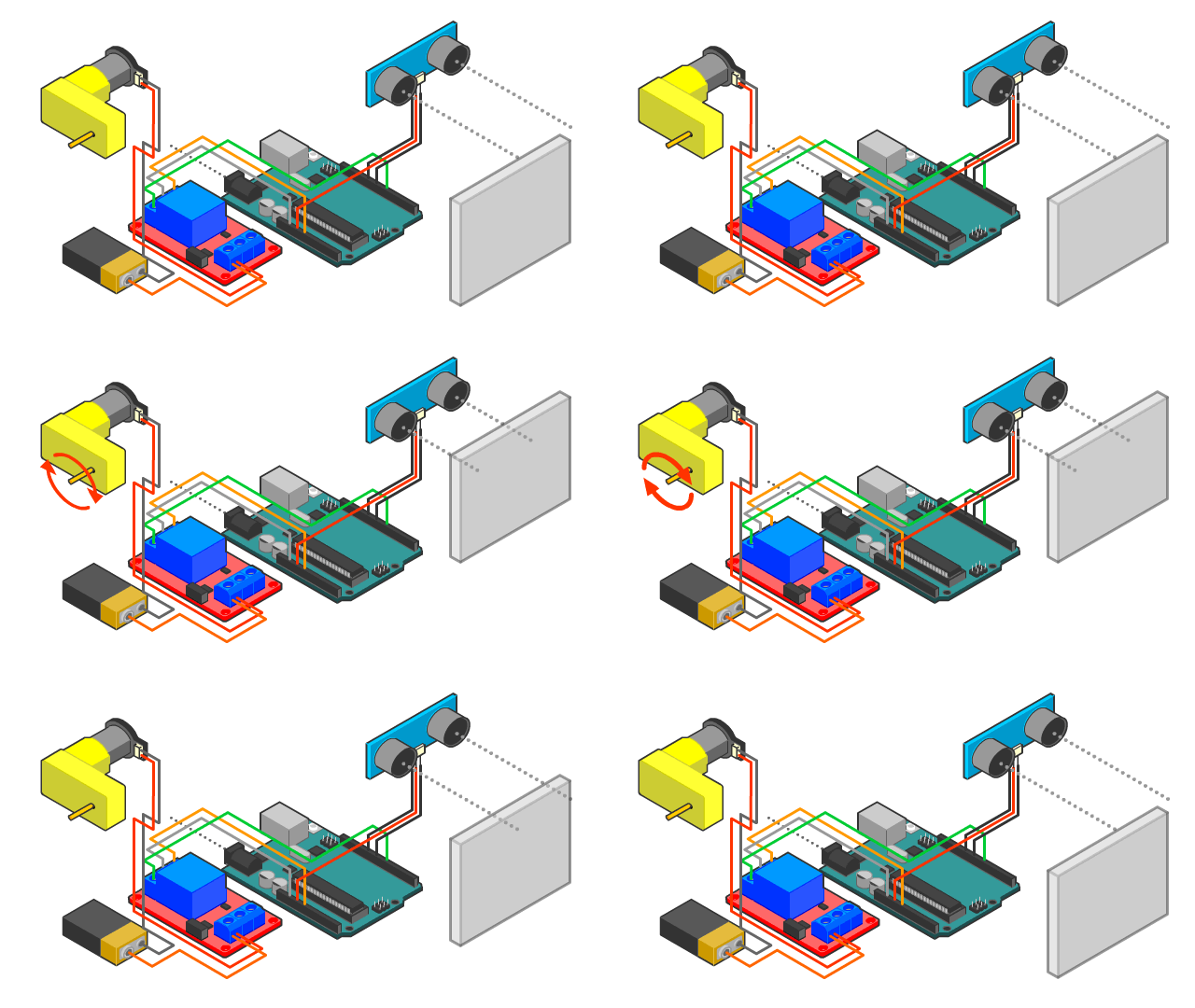
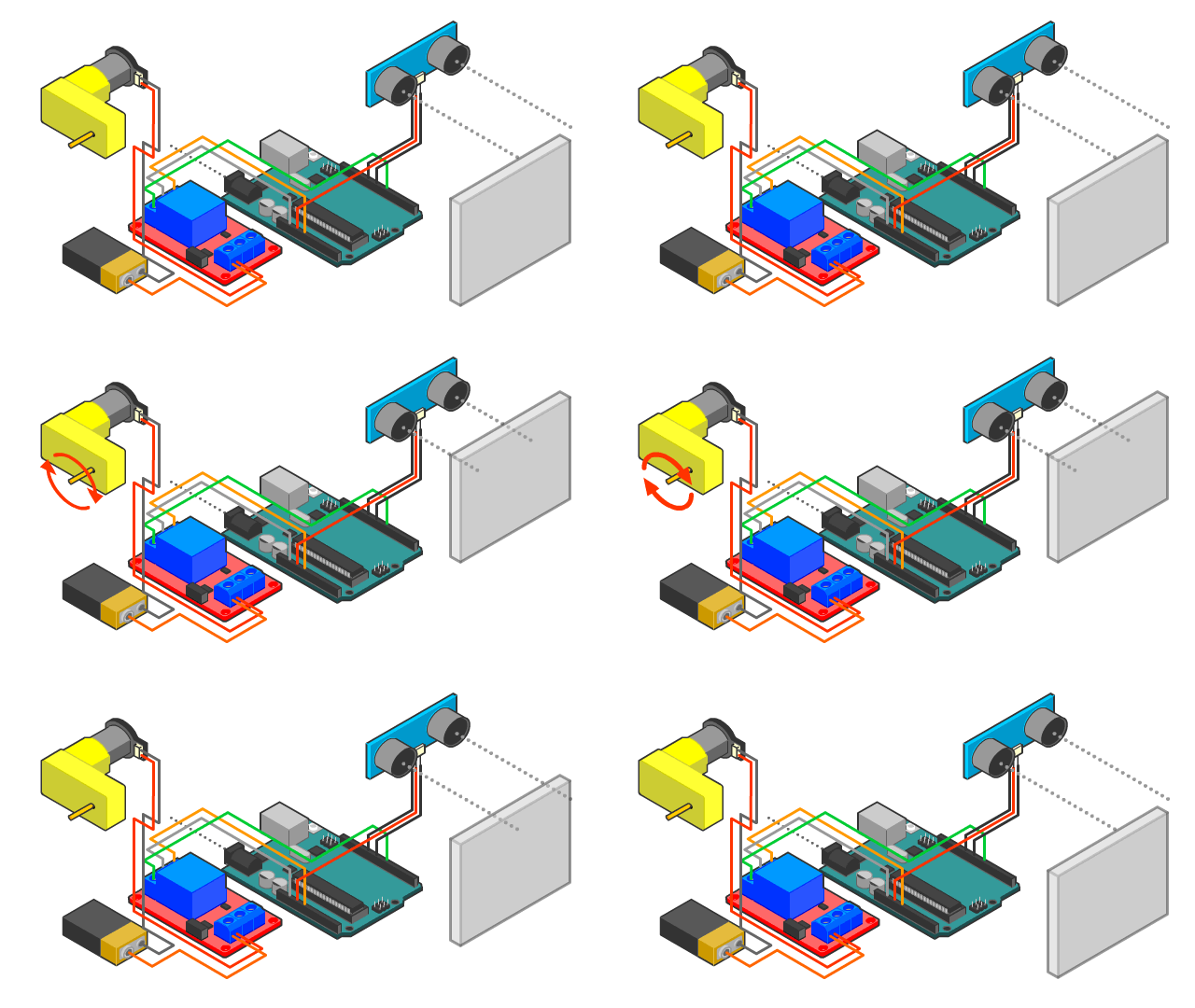
Students then learn how Arduino uses this information to control Actuators such as DC Motors, Servo Motors, Relays, and other electrical loads.
The course also introduces Motor Drivers, Transistors, Relays, and Bluetooth communication, allowing students to progress from individual component experiments to complete Smart Systems.
Through projects such as Smart Greenhouses, Irrigation Systems, Fire Fighting Systems, Radars, and Railway Crossing Gates, students begin understanding the foundations of Sensing, Control, Automation, and System Integration.
Learning Objectives
By the end of the course, students will be able to:
- Understand the role of Sensors and Actuators in electronic systems.
- Understand the concept of converting physical conditions into electrical data.
- Interface different Sensors with Arduino.
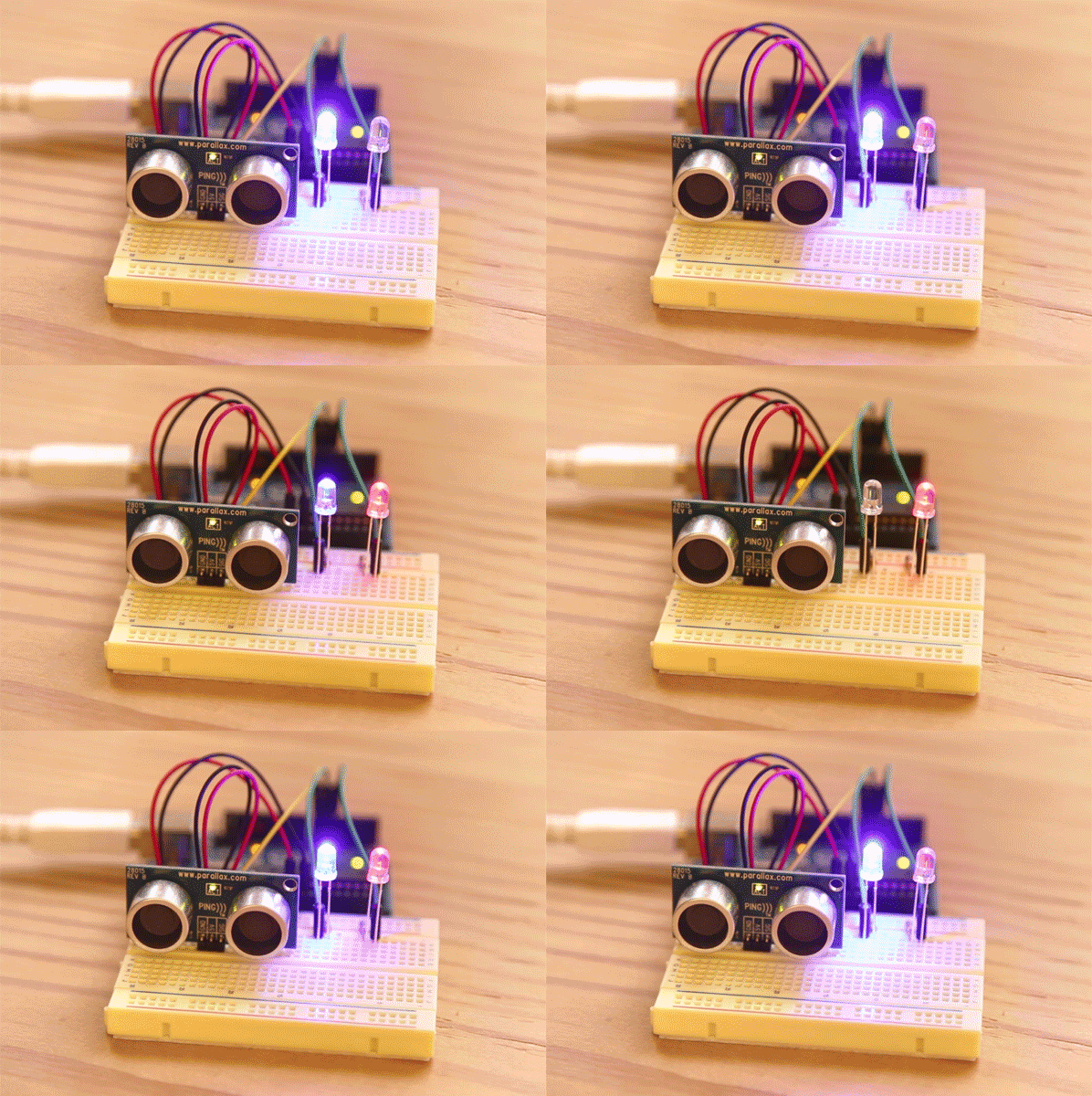
- Measure distance using an Ultrasonic Sensor.
- Detect objects using IR Sensors.
- Measure light intensity using an LDR.
- Read Temperature Sensors.
- Monitor soil conditions using a Soil Moisture Sensor.
- Use Tilt and Gas Sensors.
- Process Sensor data and use it to make decisions.
- Control DC Motors using Arduino.
- Control Servo Motor position.
- Understand why Motor Drivers are required.
- Use Motor Drivers to control motor direction and movement.
- Understand the basic operation of a Transistor as an electronic switch.
- Understand the purpose and operation of Relays.
- Control external loads through Relays.
- Use HC-05 Bluetooth communication.
- Control electronic systems through Mobile Applications.
- Combine multiple Sensors and Actuators within one project.
- Develop basic Sensing and Decision-Making Systems.
- Build complete automated systems based on environmental conditions.
- Troubleshoot Sensors, Actuators, and electronic connections.
- Understand the basic architecture of a Smart System: Sense → Process → Decide → Act.