EXPOtec - Level 2
ExpoTec Level 2 takes students beyond building individual engineering systems and introduces them to advanced mechatronics, communication, navigation, control, robotic manipulation, and machine development.
At this level, students begin working with engineering concepts used in real robots, autonomous systems, industrial robotic arms, and manufacturing machines.
They learn how different electronic systems communicate wirelessly, how robots estimate movement and orientation, how feedback can be used to improve motion accuracy, and how PID control can correct errors automatically.
Students then move deeper into robotics by studying mechanical transmission components, actuators, joints, links, hydraulic and pneumatic systems, before designing and building an Industrial Robotic Arm.
Finally, students integrate their mechanical, electronic, programming, and control skills to build complete manufacturing machines such as a CNC Router, Laser Cutting Machine, and 3D Printer.
By the end of Level 2, students move from building smart systems and robots to engineering controlled machines capable of accurate and repeatable physical operations.
Select your Course
First Course/
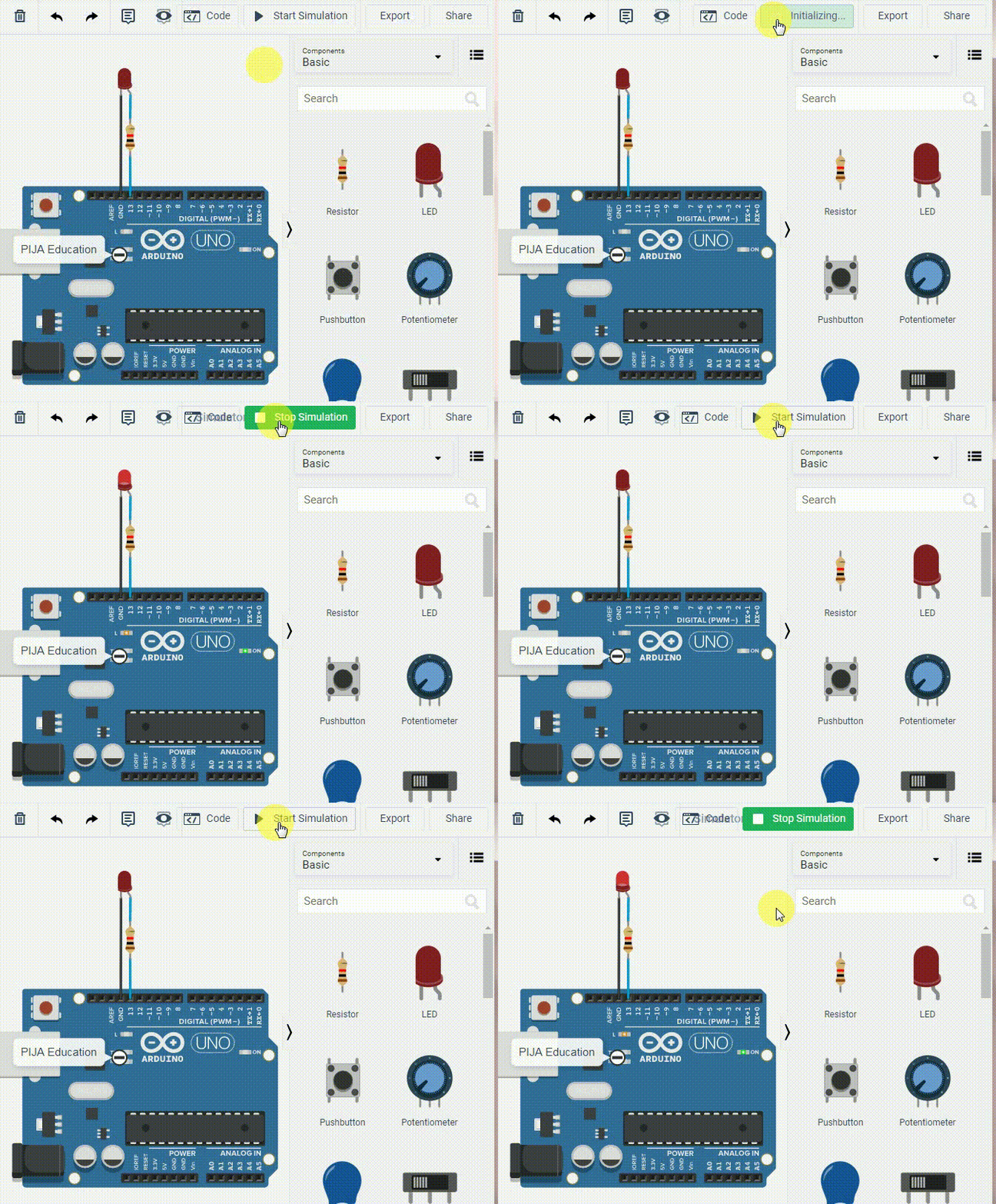
Arduino & Electronics interfacing using C++ Part 2
Explore advanced embedded systems through communication protocols, wireless connectivity, navigation, motion sensing, motor control, and closed-loop feedback systems.
Core Projects:
- Wireless Robot Control Station: Build a control station that communicates wirelessly with a mobile robot using Bluetooth or NRF modules.
- Digital Attitude Indicator: Use an IMU to measure Roll and Pitch and create a graphical display inspired by an aircraft Artificial Horizon.
- GPS Navigation System: Read geographical coordinates and develop basic location and navigation applications.
- Wheel RPM Measurement System: Use Wheel Encoders to calculate wheel speed and RPM.
- Closed-Loop Motor Speed Controller: Measure actual motor speed, compare it with the desired speed, calculate the error, and automatically correct motor output.
- PID Controlled Robot Drive: Apply PID feedback to improve robot motion accuracy and reduce differences between desired and actual movement.
Second Course/
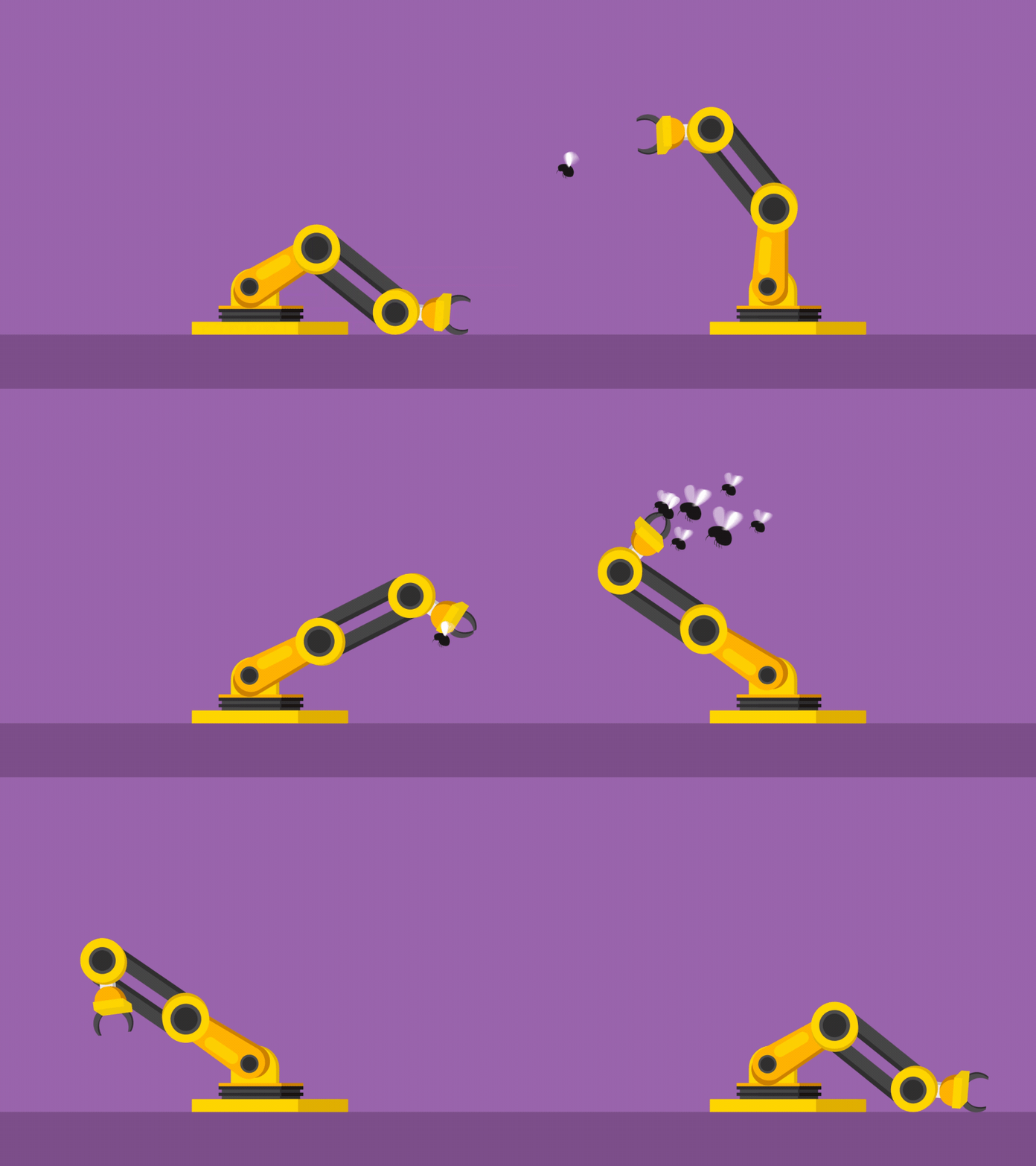
Robotics and control
Explore robot mechanics, actuators, power transmission, fluid systems, and motion control to design and build a complete Industrial Robotic Arm.
Core Projects:
- Hydraulic Mechanism: Build a mechanism demonstrating hydraulic actuation and force transmission.
- Pneumatic Control System: Develop a basic pneumatic motion-control application.
- Stepper Motor Robotic Joint: Design and manufacture a controlled rotational joint using a Stepper Motor and mechanical components.
- Robotic Arm Joint Prototype: Calculate, design, manufacture, and test an individual robotic joint.
- Industrial Robotic Arm: Design and build a multi-joint robotic arm by integrating mechanical Links, Joints, actuators, electronics, and motion-control software.
Third Course/
Advanced Mechatronics Projects
Apply mechanical design, electronics, embedded programming, and motion control to build complete digital manufacturing machines.
Core Projects:
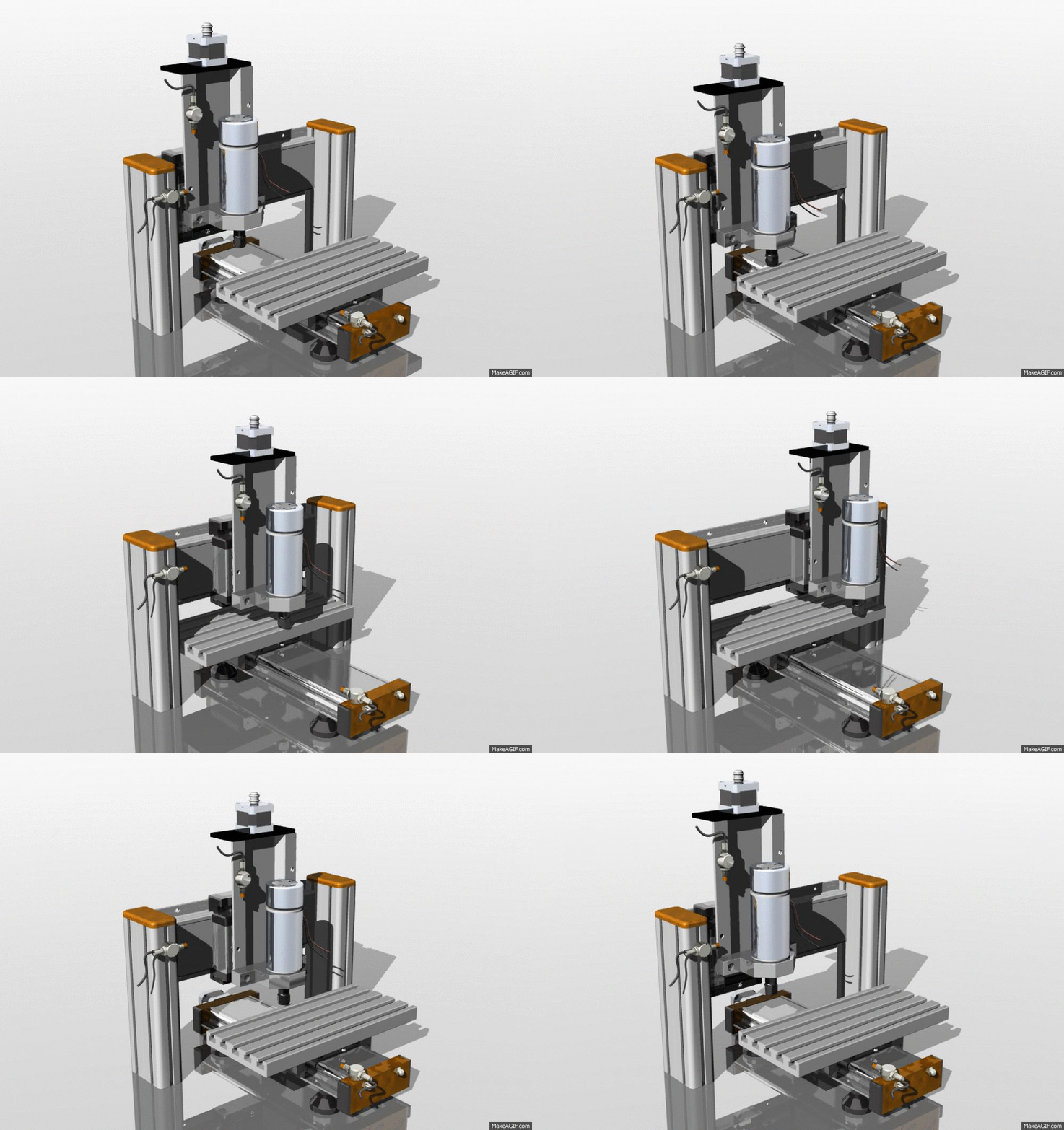
- CNC Router Machine: Students design and build a multi-axis CNC machine capable of producing controlled tool movement and manufacturing physical parts.
- Laser Cutting Machine: Students explore precision XY motion and integrate the mechanical, electronic, and control architecture required for a laser-based digital manufacturing system.
- 3D Printer: Students build a complete additive manufacturing machine by integrating mechanical motion axes, Stepper Motors, electronics, extrusion mechanisms, temperature control, machine calibration, and software.
What Will Students Learn?
During ExpoTec Level 2, students develop knowledge and practical experience across several advanced engineering areas.
Embedded Systems & Communication
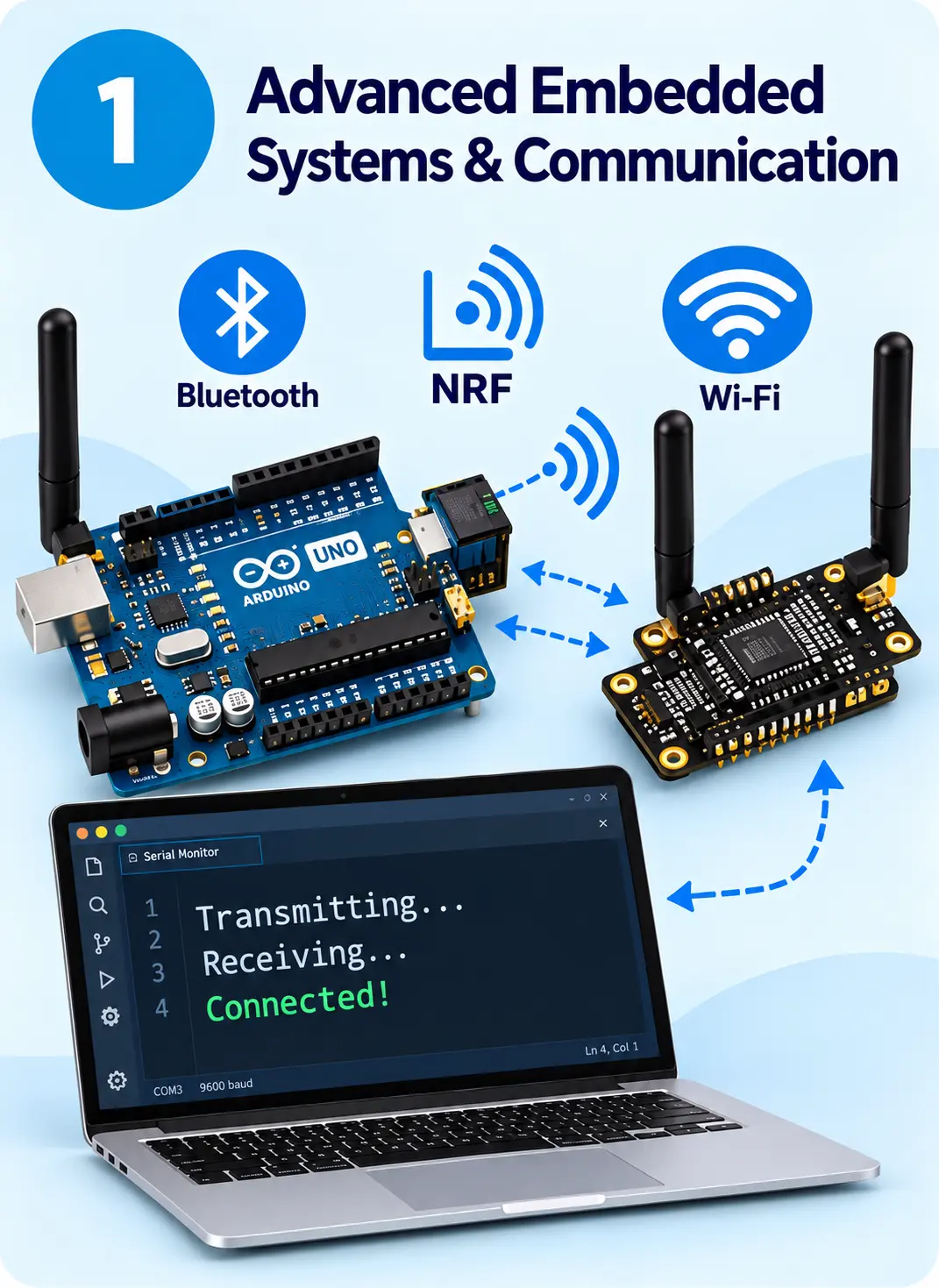
Students learn how multiple electronic systems communicate and exchange information.
They work with communication protocols and wireless technologies such as Bluetooth, NRF, and Wi-Fi, allowing them to build connected robots, remote control stations, and telemetry systems.
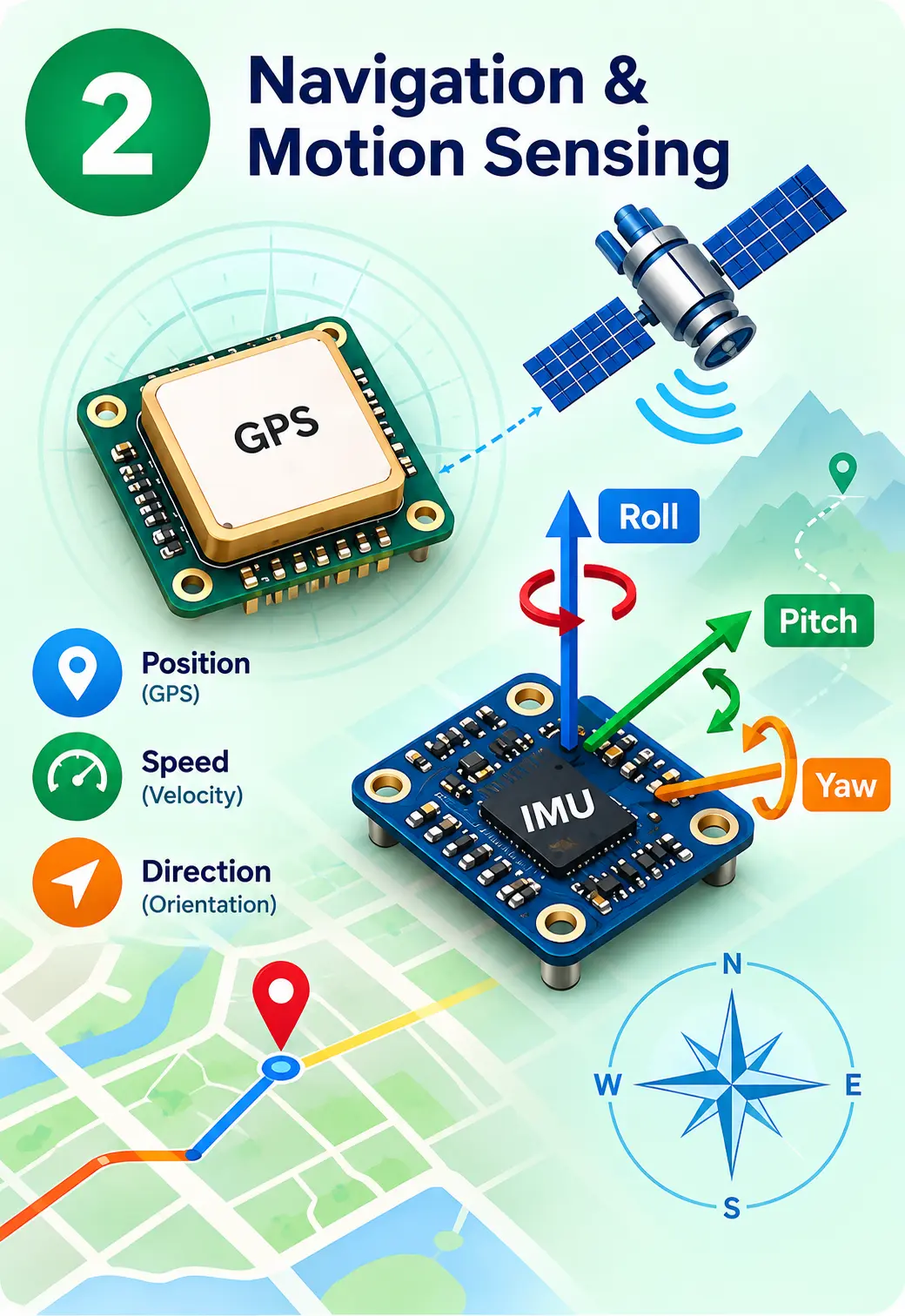
Navigation & Motion Sensing
Students learn how machines understand their movement and orientation.
They work with IMUs, GPS Modules, and Wheel Encoders to measure orientation, geographical position, wheel movement, and speed.
They begin understanding concepts such as:
Position — Orientation — Roll — Pitch — Yaw — RPM — Navigation
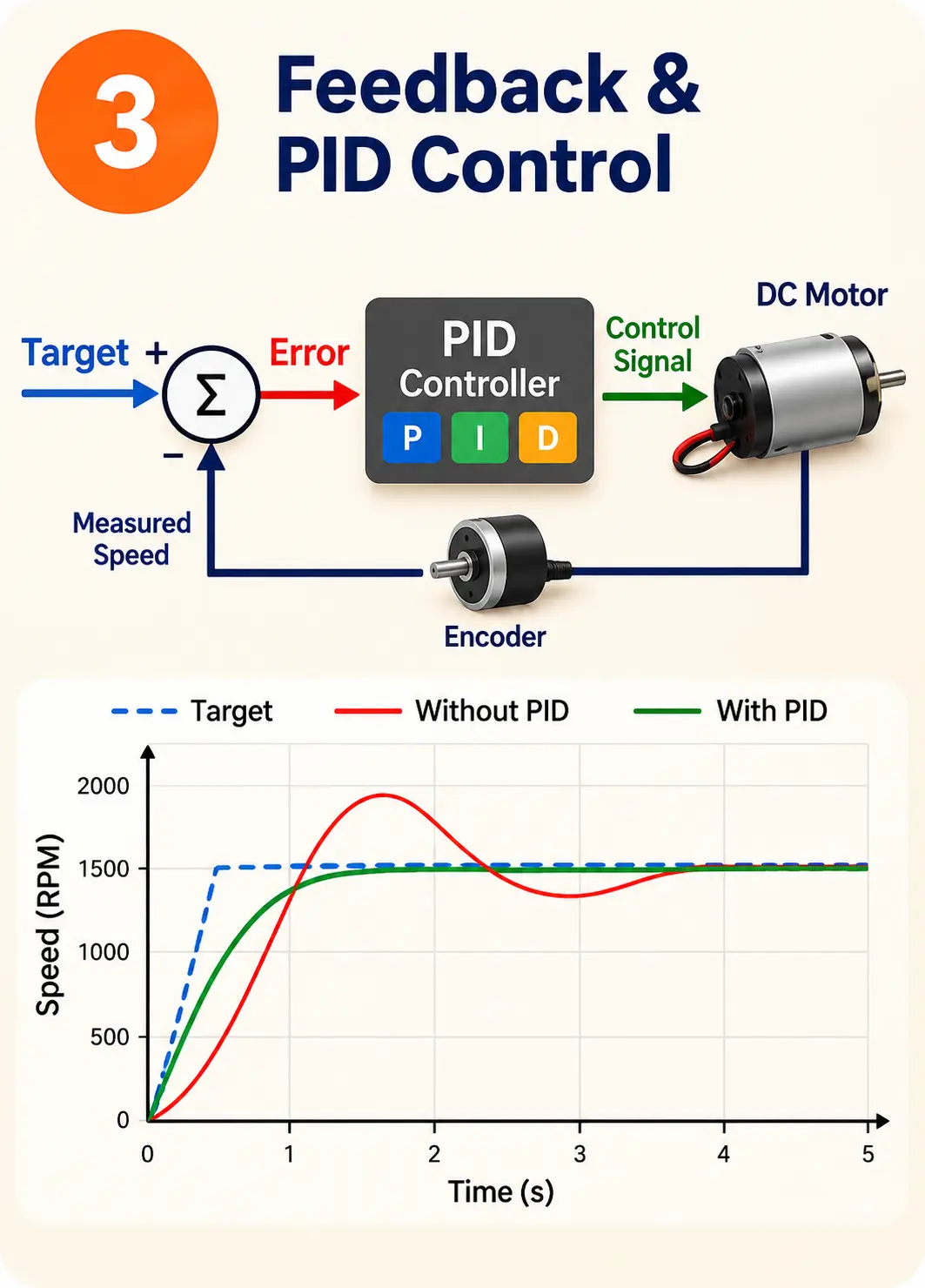
Feedback & PID Control
Students are introduced to one of the most important concepts in modern automation and robotics:
Feedback Control.
Instead of simply commanding a motor and assuming that it performs correctly, students learn how to:
Set a Target → Measure Actual Performance → Calculate Error → Correct the Output
They apply this concept through Closed-Loop and PID Control, developing systems capable of automatically reducing errors and improving motion accuracy.
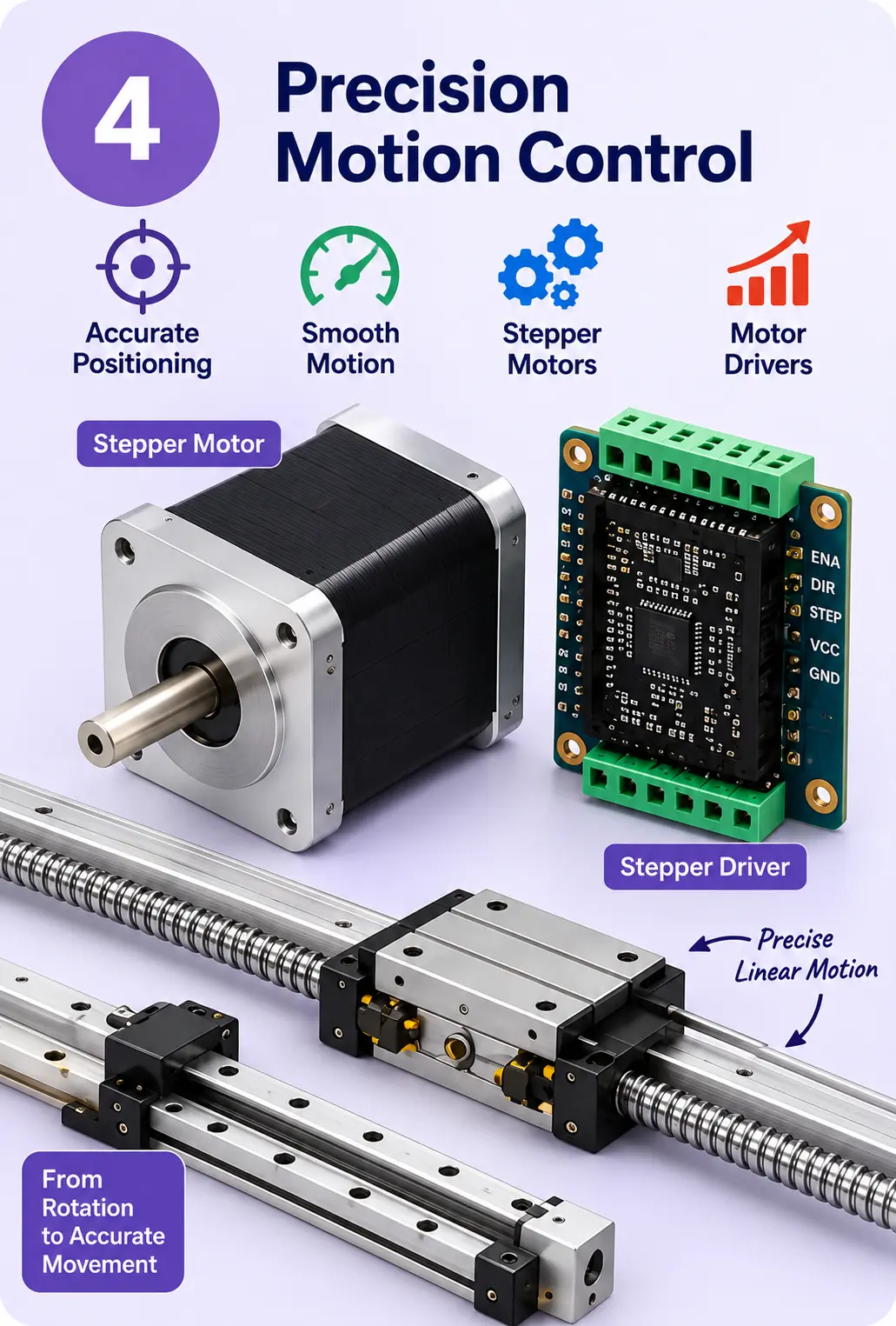
Precision Motion Control
Students move beyond basic DC Motor control and begin working with Stepper Motors and Motor Drivers.
They learn how controlled mechanical movement is generated and how precise motion can be used in robotic joints, CNC machines, Laser Cutters, and 3D Printers.
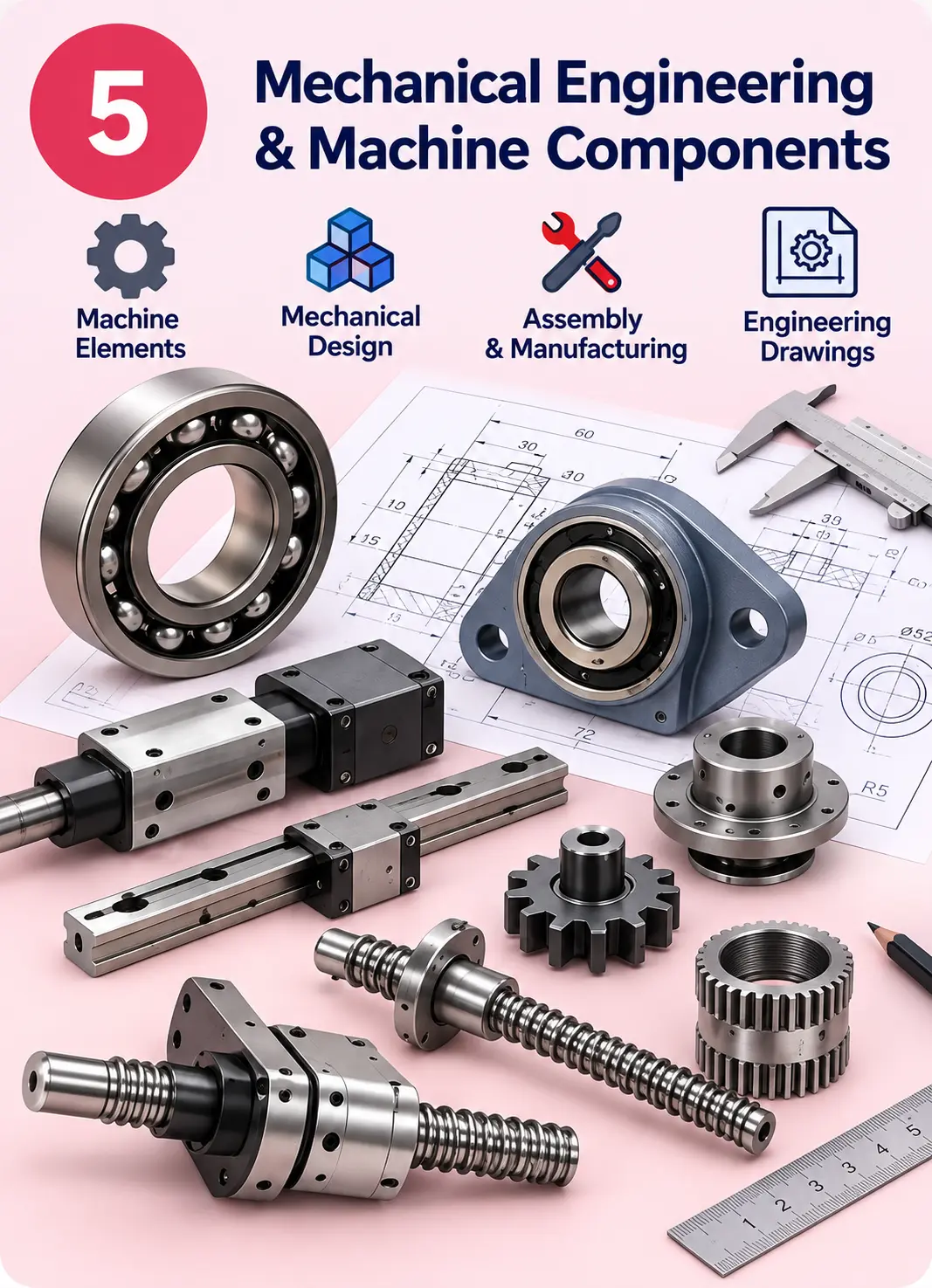
Mechanical Engineering & Machine Components
Students explore the mechanical components used inside real robots and machines.
They work with concepts and components such as:
Bearings — Shafts — Couplers — Flanges — Screws — Links — Joints — Mechanical Transmission
They begin understanding not only how to design the shape of a machine, but also how forces and movement travel through it.
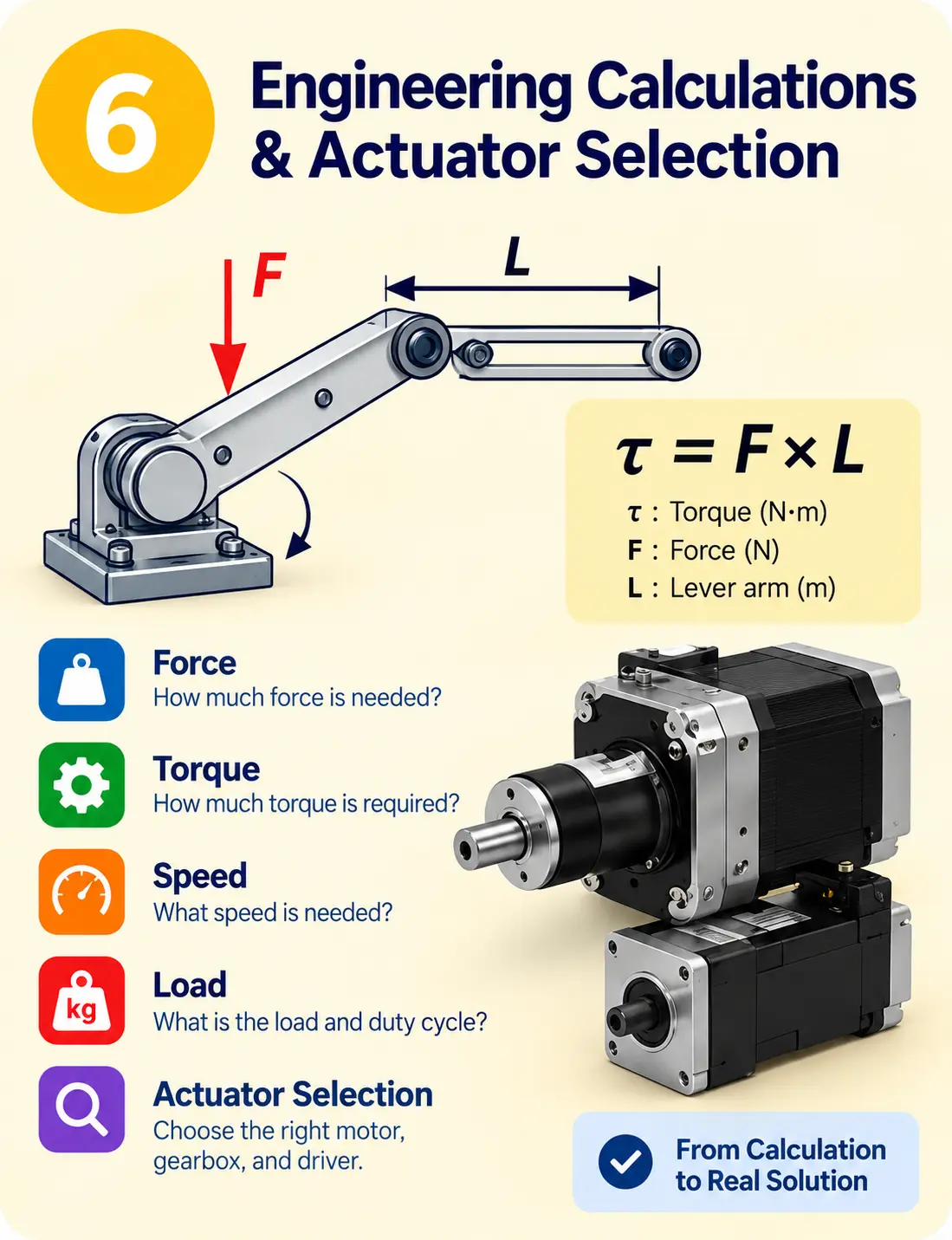
Engineering Calculations & Actuator Selection
Students begin making engineering decisions based on calculations rather than trial and error.
They learn to analyze:
Load → Force → Torque → Speed → Required Actuator
This allows them to determine what type and size of actuator a mechanism requires before building it.
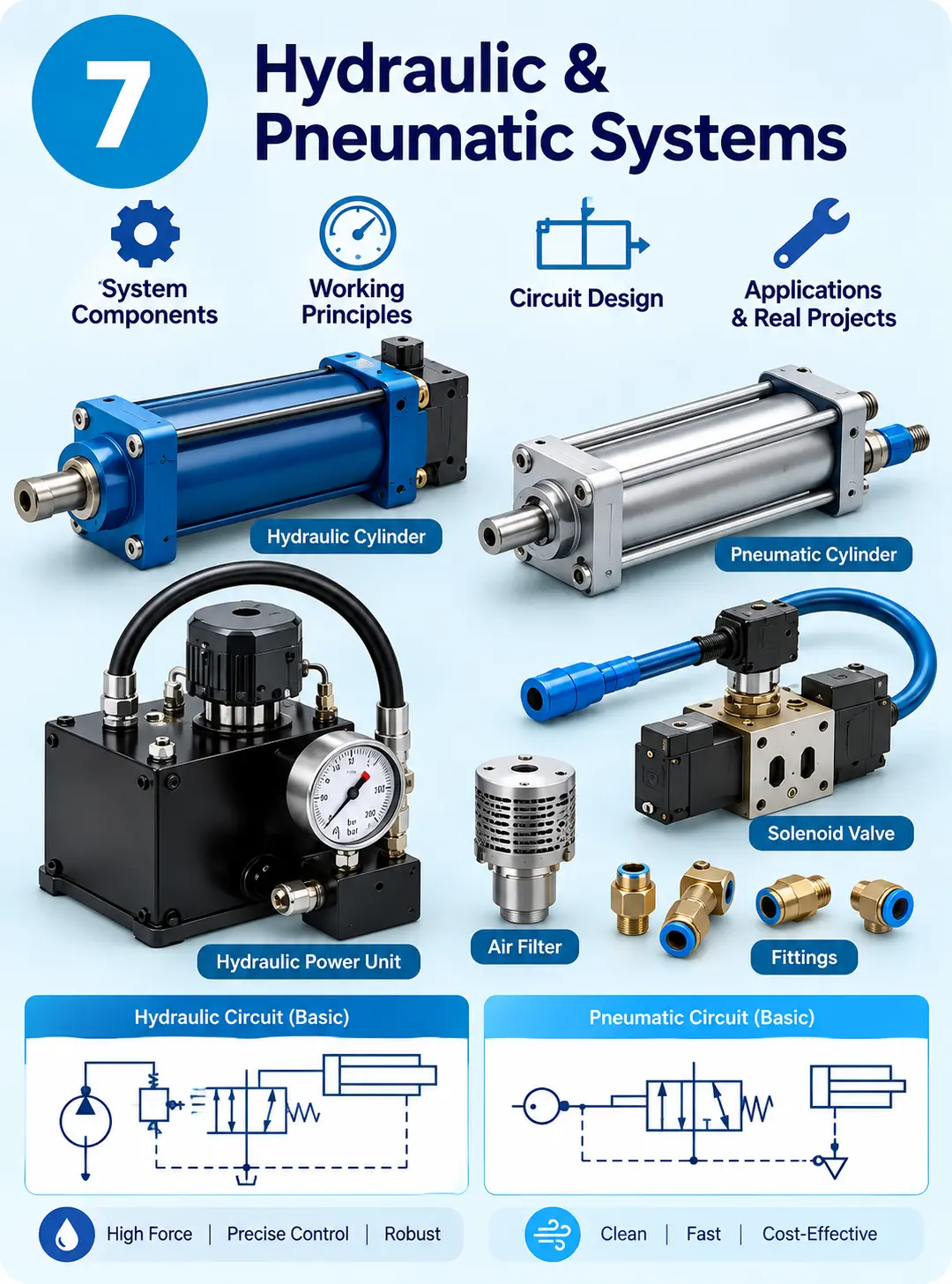
Hydraulic & Pneumatic Systems
Students are introduced to other methods of producing mechanical motion used throughout industrial systems.
They explore the principles and major components of Hydraulic and Pneumatic Systems and understand where electrical, hydraulic, and pneumatic actuators are used.
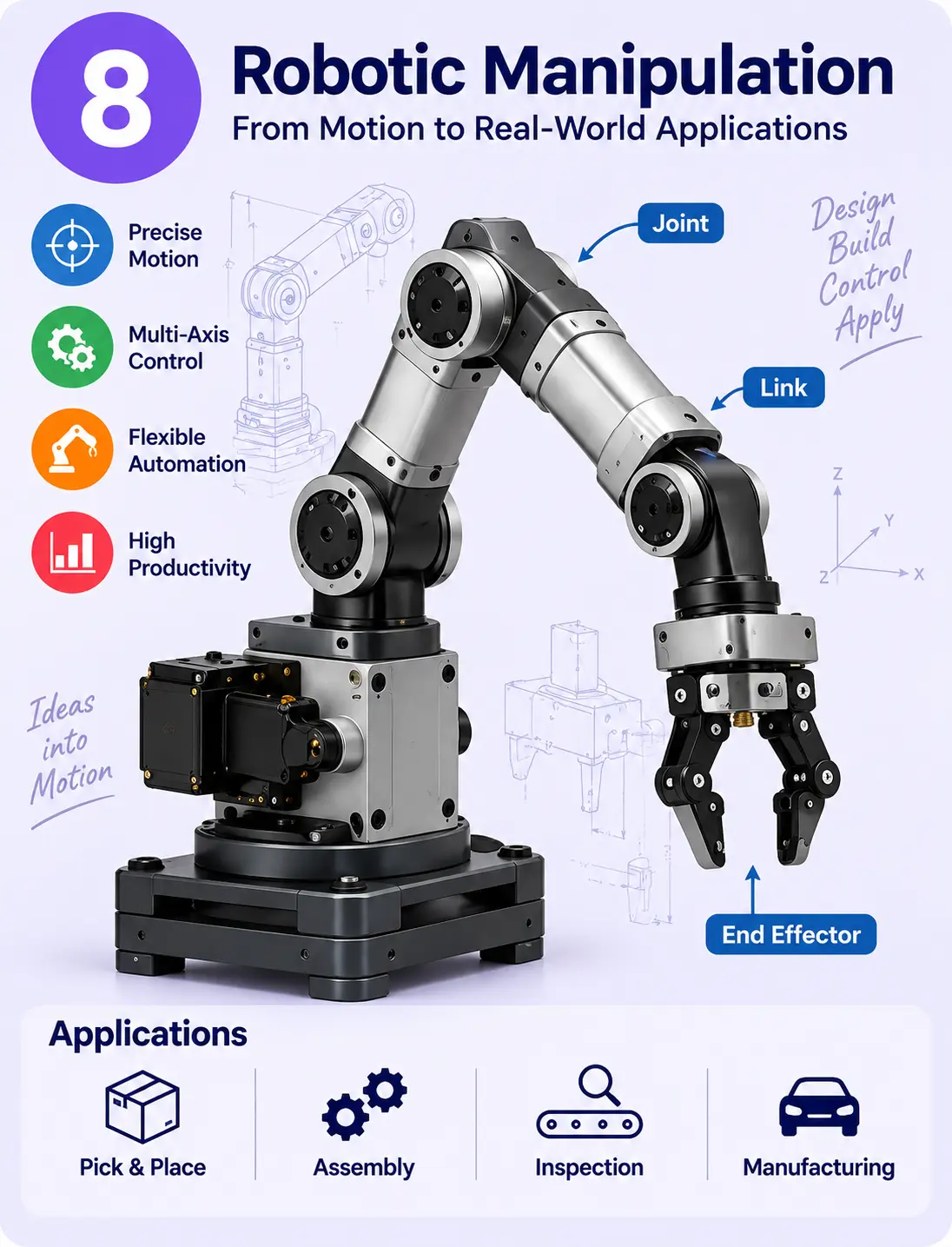
Robotic Manipulation
Students progress from Mobile Robots to Robotic Manipulators.
They understand how robotic arms are constructed from Links and Joints and how multiple controlled axes work together to move an End Effector.
Students then apply their mechanical, electronic, programming, and control knowledge to design and build an Industrial Robotic Arm.
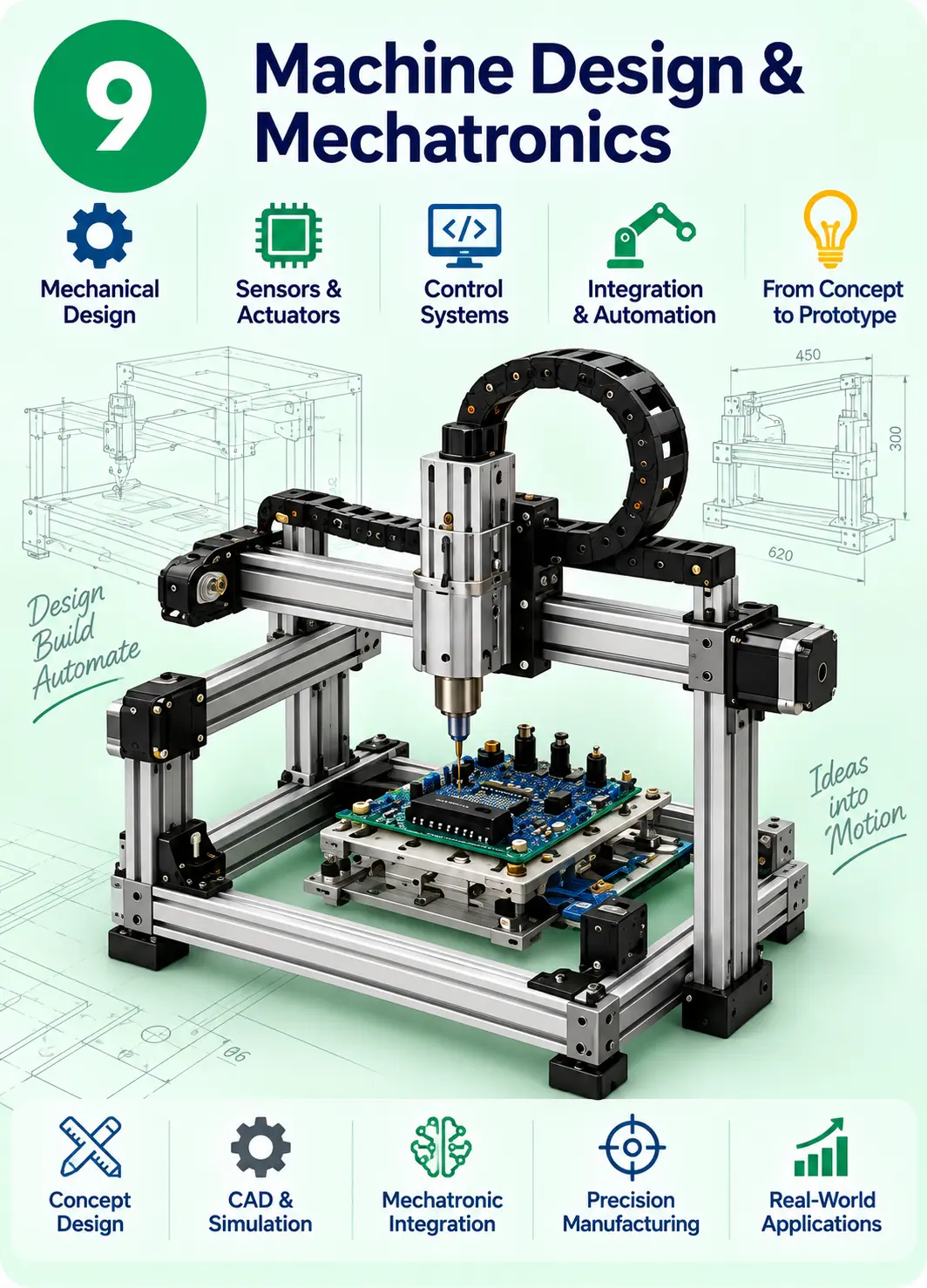
Machine Design & Mechatronics
Toward the end of Level 2, students bring multiple engineering disciplines together to develop complete machines.
They learn how:
Mechanical Structure + Motion Systems + Electronics + Motors & Drivers + Control + Software
combine to create a functional mechatronic machine.
What Will Students Be Able to Build?
Throughout Level 2, students work toward systems and machines such as:
- Wireless Robot & Control Station
- Wireless Telemetry System
- Digital Attitude Indicator using IMU
- GPS Navigation System
- Wheel Encoder RPM Measurement System
- Closed-Loop Motor Controller
- PID Controlled Robot
- Stepper Motor Robotic Joint
- Industrial Robotic Arm
- CNC Router Machine
- Laser Cutting Machine
- 3D Printer
These projects are not only final products. Each one introduces engineering principles that students can later reuse to develop completely different machines and robotic systems.
What Level Will the Student Reach?
By the end of ExpoTec Level 2, students progress beyond the Engineering System Builder stage developed during Level 1.
They reach the foundation of a:
Mechatronics System Developer
At this stage, students can begin looking at a complex machine and understanding it as a combination of:
- Mechanical System / Electronic System / Embedded Software / Sensors & Measurement / Actuators & Motion / Communication / Feedback & Control
They begin understanding not only how to make a machine work, but also how to make its movement measurable, controllable, repeatable, and more accurate.
Student Transformation
At the beginning of ExpoTec Level 2, a student may think:
“I can build and program a robot.”
By the end of the level, we want the student to think:
- “What motion does my machine require?”
- “What forces and torque will the mechanism experience?”
- “Which actuator should I select?”
- “How will different controllers communicate?”
- “How will the machine know its position and orientation?”
- “How can I measure its actual performance?”
- “How can I automatically correct its errors?”
- “How can I integrate everything into one reliable machine?”
This represents the transition from simply building technology to beginning to engineer and control machines.
By the end of ExpoTec Level 2, students don't just build machines that work — they begin engineering machines that can communicate, measure, control, correct, and perform precise physical tasks.