كافة الدورات
These projects for kids are introducing them to advanced robotics and control systems:
- Voice-Controlled Actuators: Kids use voice commands to control motors or LEDs, learning automation.
- Bluetooth-Controlled Robot: A mobile app controls a 4-wheeled robot via Bluetooth, teaching wireless communication.
- Lifter and Gripper for the Robot: Kids add a lifter and gripper to the robot, learning about robotics and motor control.
This course introduces students to Python programming basics and how to use it with a Raspberry Pi to control electronics. They'll learn about data types, loops, and conditions, and then apply these concepts to interact with components like LEDs, sensors, and motors. By the end, students will be able to create fun, interactive projects that combine software and hardware.
A Python course for kids introduces them to coding in a fun and easy-to-understand way. Kids will learn the basics of Python, including variables, loops, and conditionals, through interactive projects like games and simple programs. The course focuses on hands-on learning, helping kids develop problem-solving and logical thinking skills while making coding enjoyable and engaging. Python's simplicity makes it perfect for young beginners.
Intermediate Programming Courses
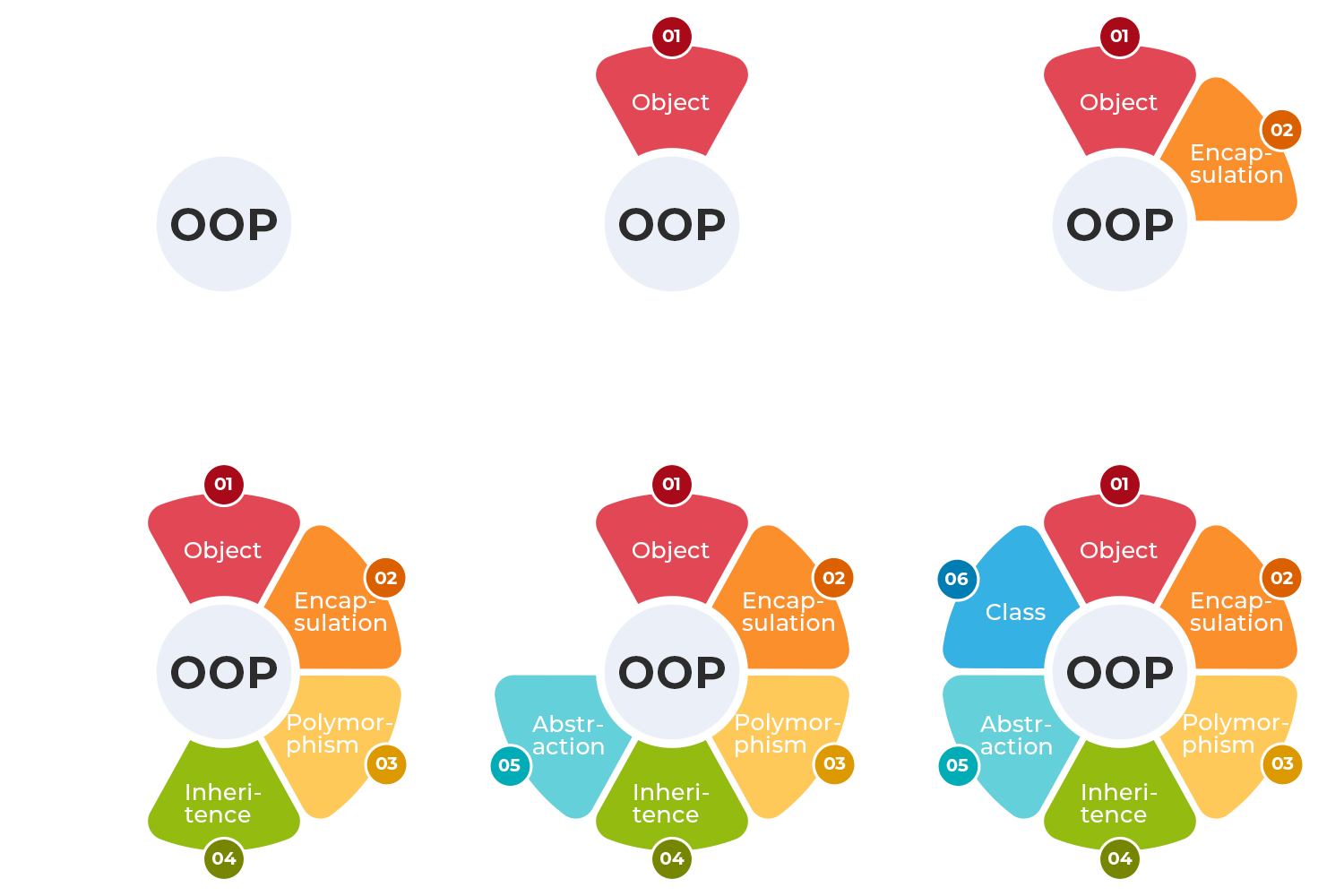
This course provides an in-depth exploration of Object-Oriented Programming (OOP) principles and practices using C++ and other object-oriented languages. It is designed for students with basic programming knowledge who want to deepen their understanding of OOP concepts and apply them to real-world problems.
These projects for kids are introducing them to advanced robotics and control systems:
- Voice-Controlled Actuators: Kids use voice commands to control motors or LEDs, learning automation.
- Bluetooth-Controlled Robot: A mobile app controls a 4-wheeled robot via Bluetooth, teaching wireless communication.
- Lifter and Gripper for the Robot: Kids add a lifter and gripper to the robot, learning about robotics and motor control.
Description:
Junior Robotics brings together everything students have learned throughout the Junior journey.
Students explore robot movement, navigation, remote control, sensing, autonomous behavior, and task-based robotics.
Instead of treating robots as toys, students begin understanding robots as machines that receive information, make decisions, move, and perform useful tasks.
Learning Objectives
By the end of the course, students will be able to:
- Understand the basic structure of a robot.
- Identify a robot's controller, sensors, actuators, and mechanical structure.
- Control robot movement and direction.
- Understand Forward, Backward, Left, Right, and Stop commands.
- Understand basic robot navigation.
- Plan simple paths for a robot.
- Remotely control a robot.
- Use sensors for autonomous navigation.
- Understand obstacle detection and avoidance.
- Understand basic line sensing and line-following behavior.
- Build robots designed for specific tasks.
- Compare manually controlled and autonomous robots.
- Test and improve robot behavior.
- Solve simple navigation and movement challenges.
- Integrate electronics, programming, sensors, and mechanics into one robotic system.
Description
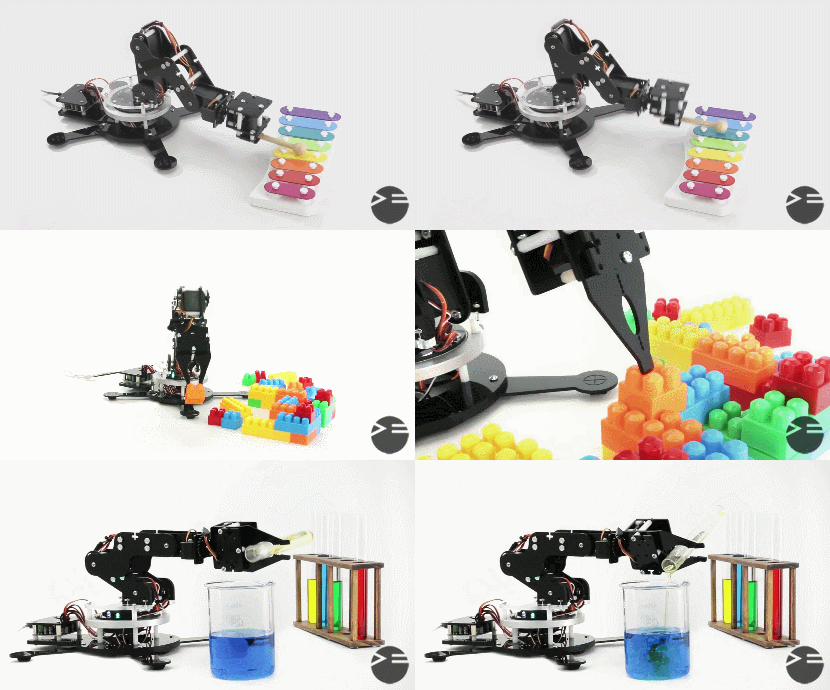
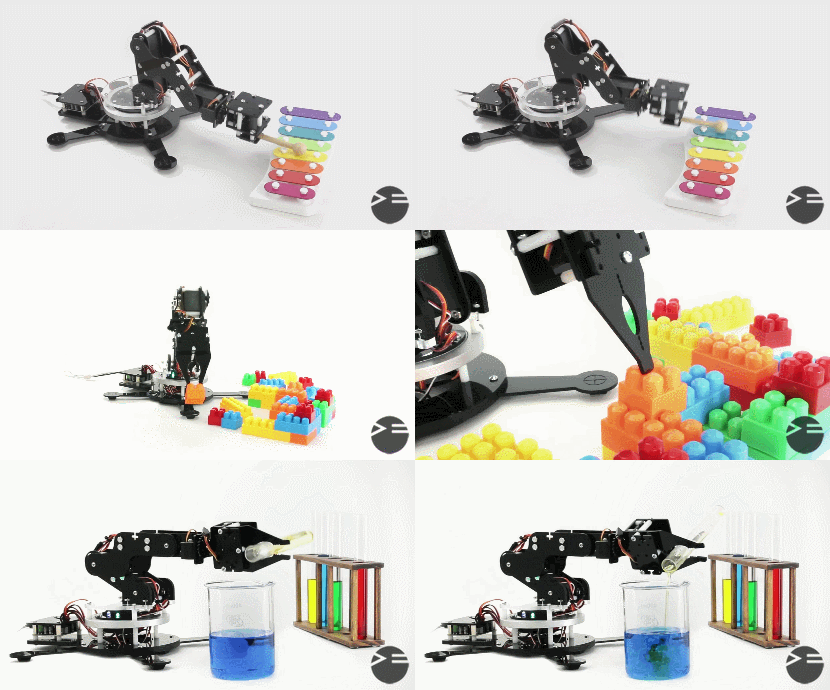
Students complete the StarTec journey by bringing mechanics, electronics, programming, and motion control together to build a complete robotic arm.
They explore how robotic arms are constructed using Links and Joints, how Servo Motors create controlled movement, and how a Gripper allows a robot to interact with physical objects.
Students assemble the mechanical structure, install the Servo Motors, connect the electronic system, and program individual joints before coordinating them to perform complete movements.
They progress from Manual Control to programmed Automatic Motion Sequences, ultimately enabling their robot arm to perform tasks such as Pick and Place.
The course introduces students to the foundations of Robotic Manipulation, giving them a first understanding of the engineering principles behind industrial robotic arms and automated manipulation systems.
Learning Objectives
By the end of the course, students will be able to:
- Understand the basic structure of a Robotic Arm.
- Identify the Base, Links, Joints, and End Effector.
- Understand the role of each Joint in producing movement.
- Understand the concept of Degrees of Freedom at an introductory level.
- Understand the purpose of a robotic Gripper.
- Assemble the mechanical structure of a Robot Arm.
- Install Servo Motors within mechanical joints.
- Connect multiple Servo Motors to the electronic control system.
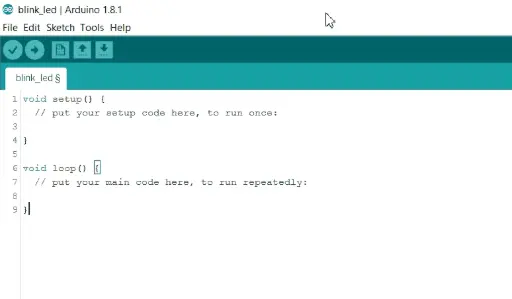
- Control Servo Motor angles using Arduino.
- Control individual Robot Arm joints.
- Coordinate multiple joints to create complete movements.
- Understand basic Motion Sequences.
- Define safe movement ranges for different joints.
- Create a Manual Control Mode.
- Control the Robot Arm through user inputs.
- Create an Automatic Control Mode.
- Program predefined sequences of robotic movements.
- Control the opening and closing of a Gripper.
- Perform basic Pick and Place operations.
- Understand how a robot physically interacts with objects.
- Test and improve Robot Arm movement.
- Troubleshoot mechanical, electronic, and programming problems.
- Integrate Mechanical Design + Electronics + Programming + Motion Control into one system.
- Understand the foundations of Robotic Manipulation.
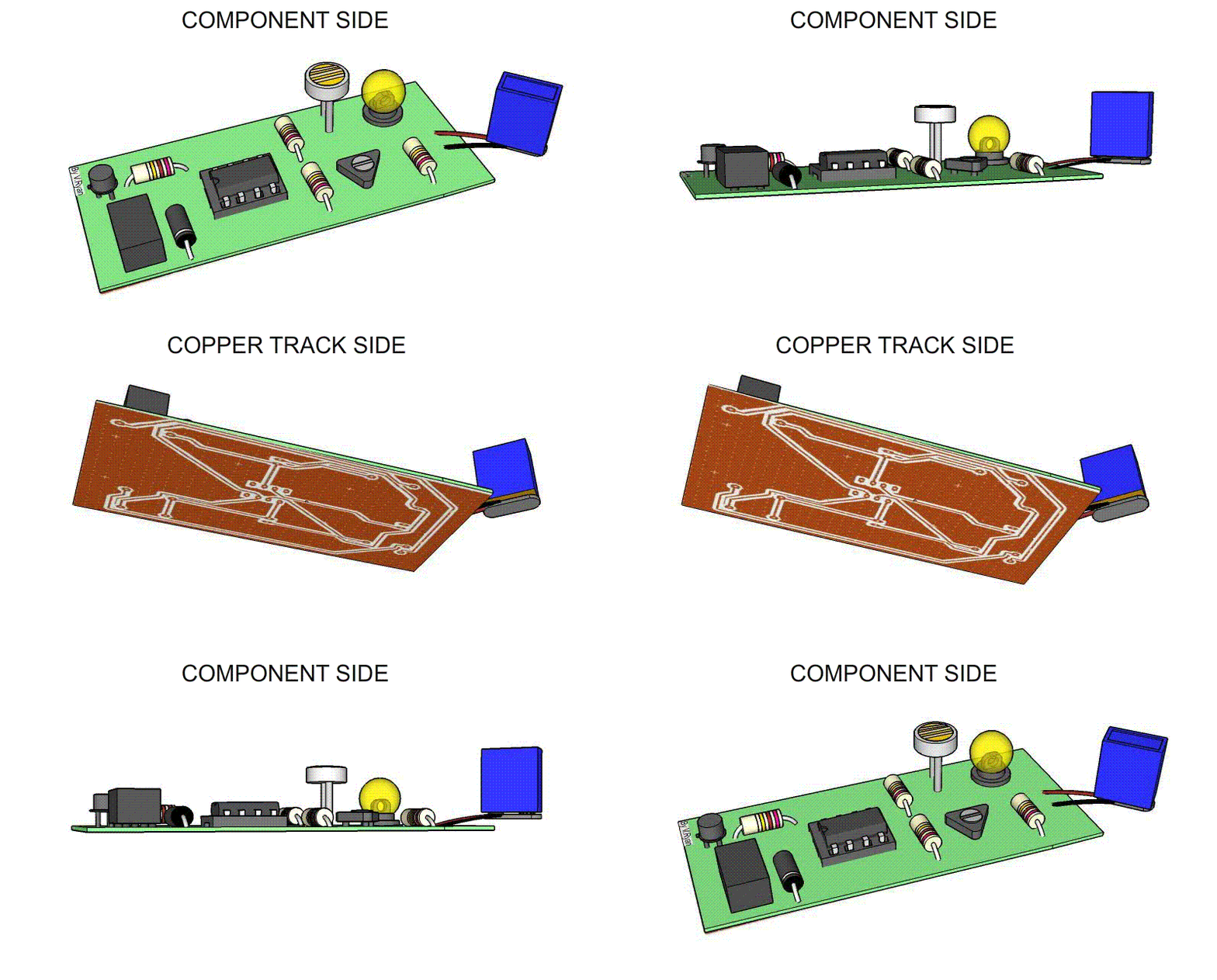
Introduces kids to the basics of creating printed circuit boards (PCBs) in a fun and interactive way. Students will learn how to design circuits, arrange components, and create PCB layouts using Fritzing's user-friendly interface. The course covers essential concepts like electrical connections and soldering, allowing kids to bring their designs to life by fabricating real PCBs.
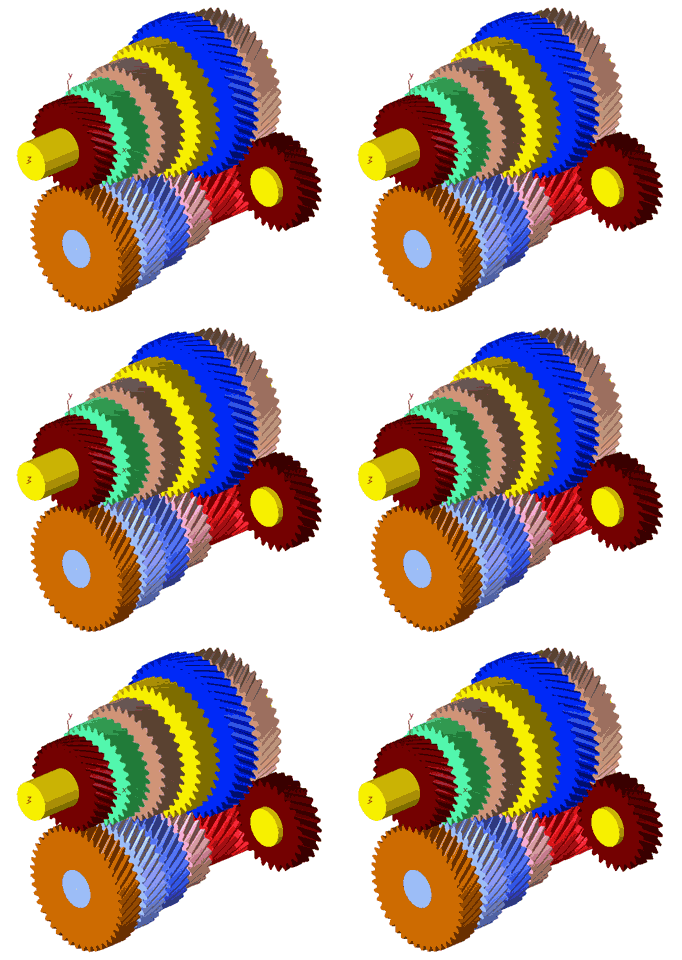
A mechanical design course using Tinkercad for kids introduces them to 3D modeling and design, allowing them to create mechanical parts like gears and simple machines. Kids learn how to design in a virtual environment, and then use a 3D printer or laser cutting machine to manufacture their designs in real life and assembling the parts together.
Students learn AC and DC circuits and know the electronic components such as transistors, capacitors, diodes and inductors which students use in manufacturing advanced circuits
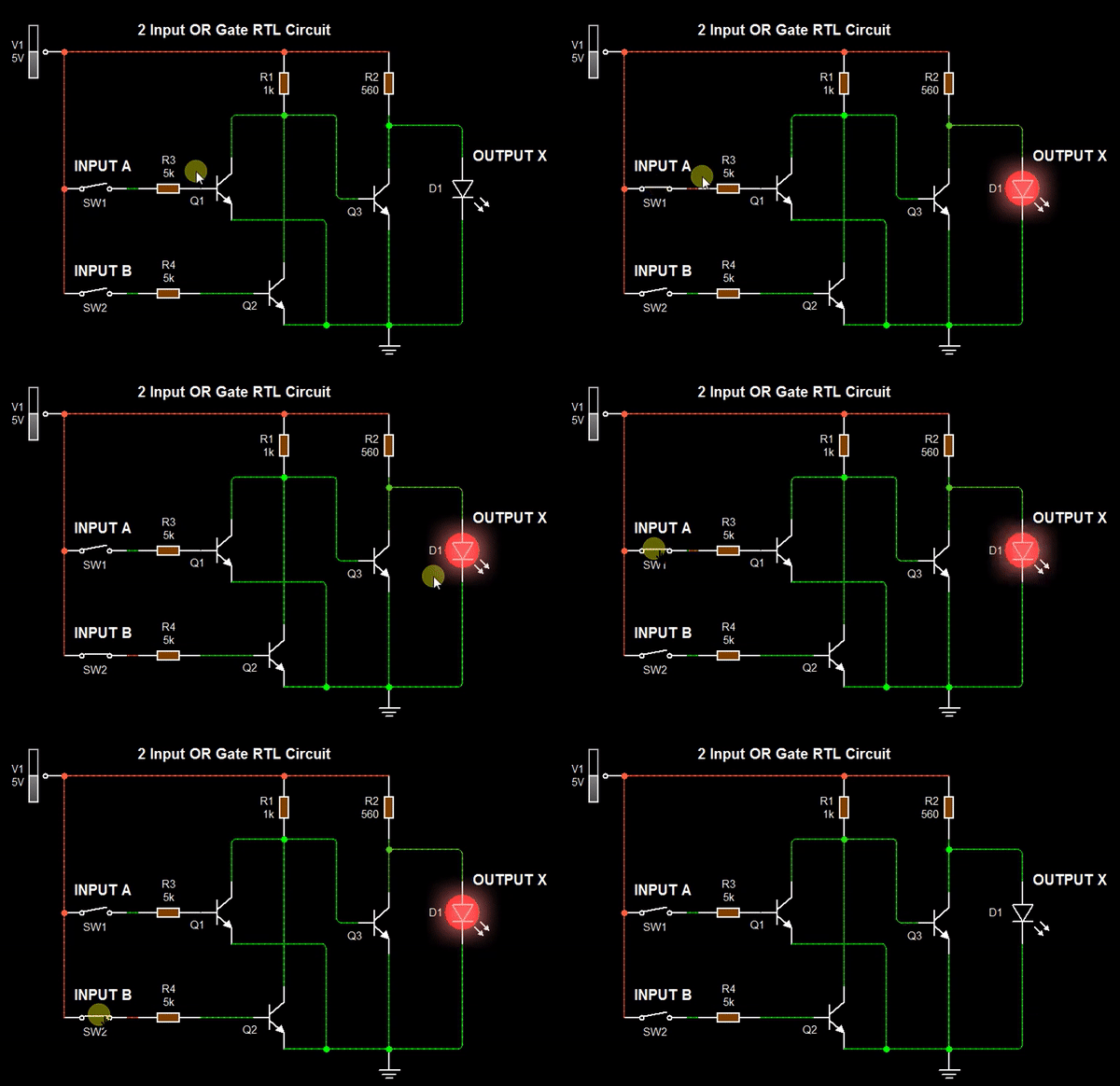
and learn to manufacture digital cirدcuits
A mechanical design course using Tinkercad for kids introduces them to 3D modeling and design, allowing them to create mechanical parts like gears and simple machines. Kids learn how to design in a virtual environment, and then use a 3D printer or laser cutting machine to manufacture their designs in real life and assembling the parts together.
Introductory Programming Courses
This course is designed to introduce students to the basics of programming using C++. It is aimed at beginners with little to no programming experience, providing a solid foundation in C++ syntax, semantics, and programming techniques. By the end of the course, students will be able to write simple to moderately complex programs in C++.