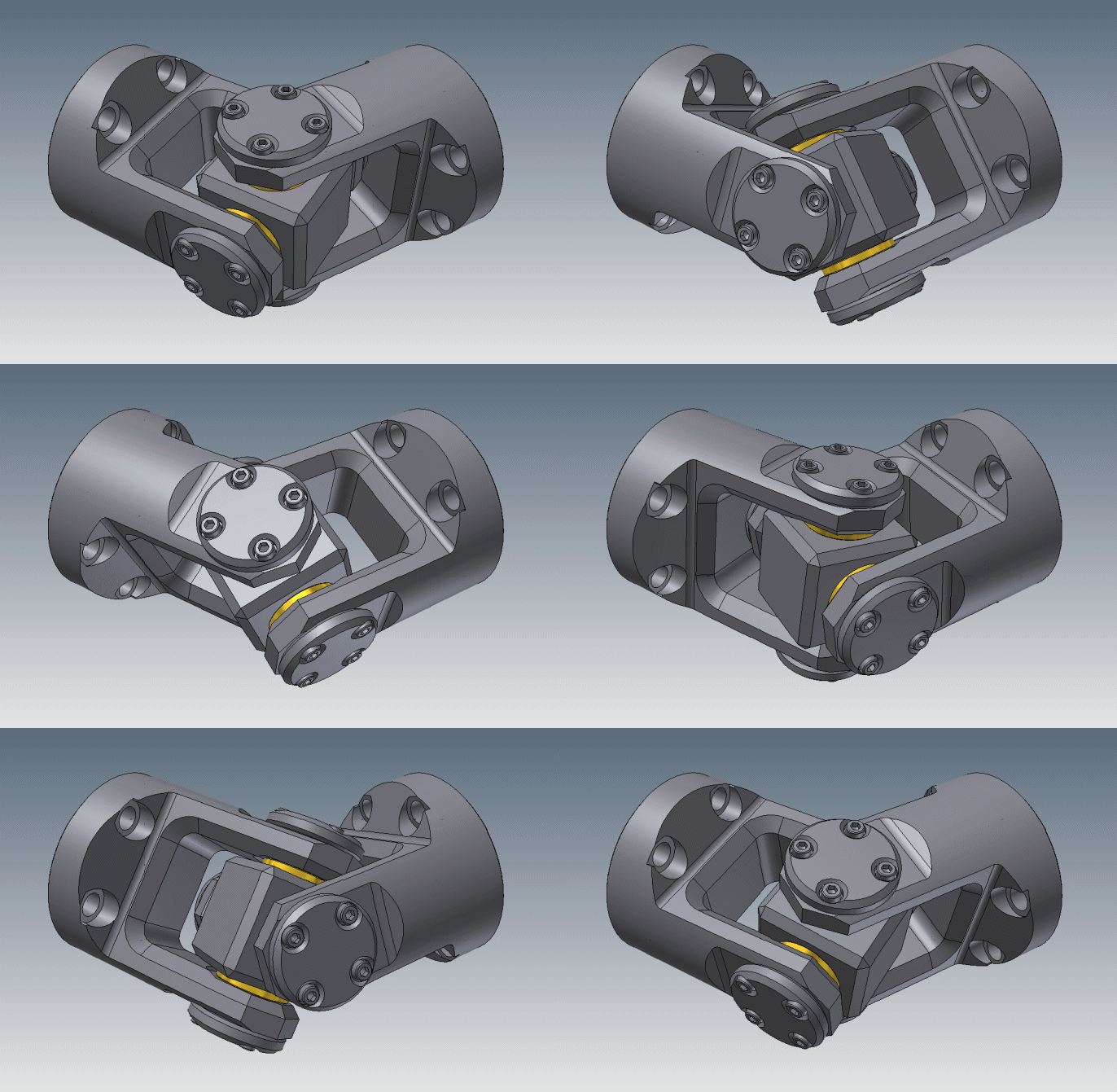
Mechanical Design & Manufacturing using SolidWorks
Description
Students develop the mechanical engineering skills required to transform ideas into manufacturable mechanical systems and machines.
The course begins with the foundations of Engineering Drawing, Dimensions, Measurement, Tolerances, Fits, Materials, and Manufacturing, before progressing into professional 3D mechanical design using SolidWorks.
Students learn to design increasingly complex mechanical parts using Parametric Modeling, then explore real machine components including Shafts, Bearings, Fasteners, Couplings, Gears, Pulleys, Belts, Springs, and Structural Components.
They learn that successful mechanical engineering is not simply about creating a 3D shape, but about designing parts that can be assembled, moved, manufactured, maintained, and used in real machines.
Students progress from individual Parts to Subassemblies and finally complete Machines, learning Assembly Design, Mechanical Relationships, Degrees of Freedom, Interference Detection, Engineering Drawings, Bill of Materials, and Design for Manufacturing.
By the end of the course, students will be able to design a complete mechanical machine from individual components through to a fully documented and manufacturable assembly.
Learning Objectives
By the end of the course, students will be able to:
- Understand the mechanical engineering design process.
- Read and create basic engineering drawings.
- Understand dimensions, units, scale, and coordinate systems.
- Understand Orthographic and Isometric representations.
- Measure physical parts using engineering measurement tools.
- Understand tolerances, clearances, and basic fits.
- Create fully defined parametric sketches.
- Design 3D mechanical parts using SolidWorks.
- Apply Extrude, Revolve, Sweep, Loft, Shell, Pattern, Mirror, Fillet, and Chamfer features.
- Understand design intent and parametric modeling.
- Reverse-engineer simple physical components.
- Understand common engineering materials and their applications.
- Understand common manufacturing processes.
- Design parts for 3D Printing, CNC Machining, and Laser Cutting.
- Understand Shafts, Bearings, Fasteners, Couplings, Pulleys, Belts, Gears, Springs, and structural components.
- Select appropriate mechanical components for a design.
- Design mechanical Parts and Subassemblies.
- Understand Degrees of Freedom in mechanical systems.
- Create and control SolidWorks Assemblies.
- Apply mechanical Mates correctly.
- Detect Interference and Clearance problems.
- Create Exploded Views.
- Produce Engineering Drawings.
- Generate a Bill of Materials.
- Design enclosures and mounting systems for electronics.
- Divide a complete machine into mechanical subsystems.
- Design a complete machine from engineering requirements.
- Prepare mechanical designs for manufacturing.
- Complete the workflow from Requirement → Concept → Part Design → Assembly → Verification → Manufacturing Documentation.